

Investigating stress-induced mitochondrial dysfunction and its role in systemic health
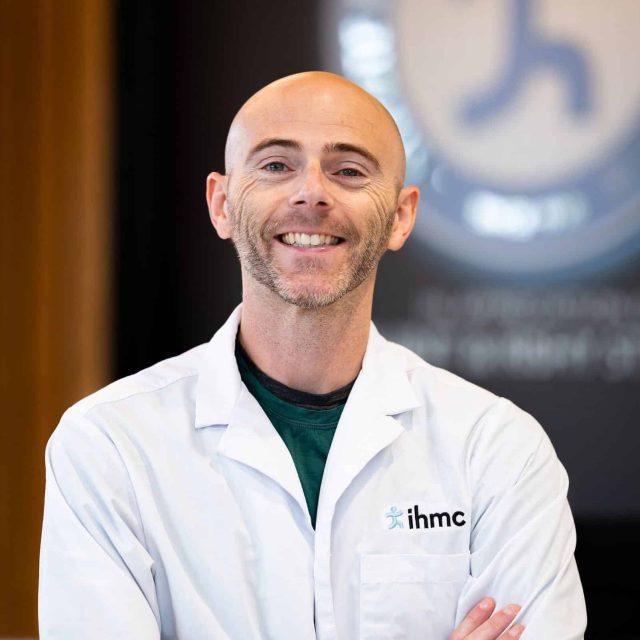
Metabolic stress is a common occurrence for active-duty military service members. It occurs during periods of sustained physiologic challenges such as continuous physical activity, thermal stress, severe caloric deficits and sleep deprivation, which warfighters routinely experience. These stressors, both on their own and in combination, eventually lead to metabolic dysfunction, which can degrade a warfighter’s operational performance. HMC Research Scientist Zachary Graham has a new three-year Air Force Office of Scientific Research grant to gain a better understanding of stress-induced mitochondrial dysfunction. Mitochondria are specialized, double-membrane structures within cells that serve as the primary source of energy production. They are often referred to as the powerhouses of the cell. In addition to regulating energy metabolism, mitochondria also regulate controlled cell death, called apoptosis. They also can drive a cellular pro-inflammatory environment when normal function is compromised. Dysfunctional mitochondria create excessive reactive oxygen and nitrogen species (ROS/RNS) that can damage proteins, lipids and DNA/RNA; these changes also activate inflammation. Gaining a better understanding of mitochondria and their role in stress-induced mitochondrial dysfunction can provide critical insights into the sources of cellular energy as well as breakdowns of cellular energy. Graham, who has been at IHMC for the past five years, primarily… Read More
IHMC studies the potential of exoskeletons to reduce the biomechanical injuries shipyard workers face
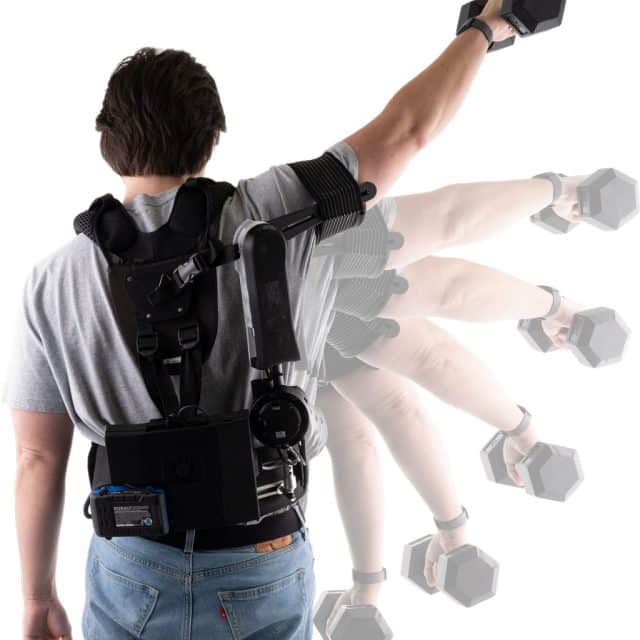
When Jared Li started to study shipyard workers, he didn’t know much the work they did on a daily basis, except that the work was heavily manual and required working through tight and hazardous spaces. He also noticed that much of the work involved bending, lifting, and holding tools for extended periods of time (welding, drilling, grinding, etc.), especially with arms outstretched. Li, who leads the exoskeleton research at IHMC, wondered if exoskeletons might be a good fit for shipyard workers. Li’s work is focused on finding real-world applications for the technology. “It became clear to me that the shipbuilding industry was heavily affected by overuse injuries,” said Li. “I started thinking that perhaps the work we do with exoskeletons here at IHMC might be able to ease some of the biomechanical issues the workers face. Just imagine someone who is holding up their arms and welding long periods of time. That puts a lot of strain on the shoulders and the back – so a shoulder-focused exoskeleton could probably help offload that strain on the shoulder muscles. At least, that was my thinking.” So, Li reached out to Austal USA, a subsidiary of the Australian-based shipbuilding company Austal that… Read More
A Q&A With IHMC’s new CEO, Dr. Timothy Broderick

In October, when Dr. Timothy Broderick took over as IHMC’s new CEO, he became just the third person to hold the CEO title since IHMC’s founding in 1990. Broderick took over for Dr. Morley Stone, who stepped away as CEO to lead an Air Force spin-out company he helped found, Mined XAI. Stone replaced Dr. Ken Ford, IHMC’s founder wh o spent 34 years as the institute’s leader and CEO before transitioning into an emeritus role. Broderick is hardly new to IHMC. He joined the institute eight years ago as Chief Science Officer and Senior Research Scientist, to shape research strategy and lead high-impact research focused on enhancing human health and performance in extreme environments. His path to IHMC- and now to its top leadership position- has not been a straight line. A practicing academic surgeon by training, Broderick has spent much of his career working at the convergence of medicine, science and emerging technologies. Before joining IHMC, he served as a program manager at the Defense Advanced Research Projects Agency (DARPA), where he conceived and established biotechnology programs focused on the diagnosis and treatment of military-relevant disease and injury. Earlier, he served as program manager at the U.S. Army… Read More
Centering the Human in AI Decision Making
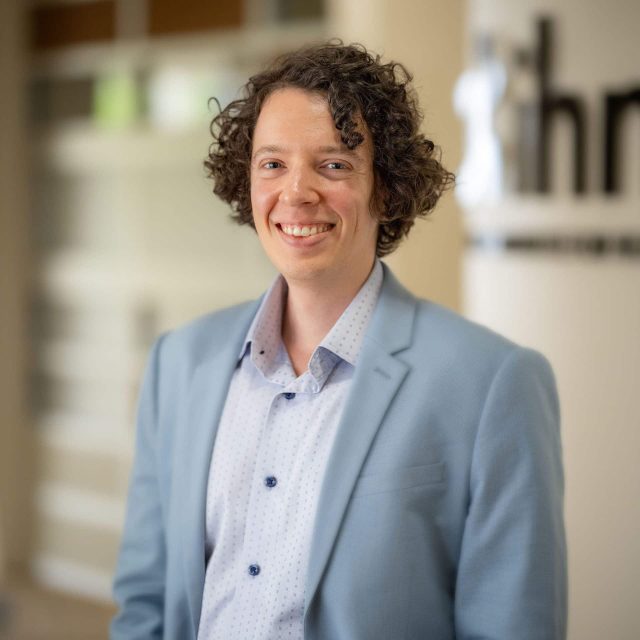
IHMC, in collaboration with Carnegie Mellon University, has developed a new AI, but it’s not a Large Language Model; it doesn’t need a data center; and you can’t talk to it. Yet. In the DARPA-funded project MIMIR (Metacognitive Intelligence Maneuvers for Influence and Resolution), Dr. Ian Perera, with co-Principal Investigators Dr. Matt Johnson and Dr. Mark Orr, leads a team of researchers in building an AI system that rapidly learns to make decisions and, perhaps more importantly, learns how we as humans make them. Leaving data-hungry methods behind, MIMIR advances the IHMC mission of centering the human in the AI decision-making process, while paving the way to systems that learn to explore the world without very much input from us at all. If you want to find an answer to a question, solve a common problem, reorganize a document, or write a program, you probably will still use a Large Language Model, or LLM. But the MIMIR team is targeting different kinds of problems – those where the data is sparse, complex, and the best strategy is dynamic and responsive to changing environments or conditions. Think cybersecurity, disaster response, negotiations – domains where human expertise is immensely valued but difficult… Read More
Investigating exercise’s potential to reverse hallmarks of aging

What if you could reduce risk of mortality from any cause by 13, 26, or 39 percent? Researchers at IHMC think it’s not only possible, but well within reach of people in their sixties who are willing to invest in three days a week of combined endurance exercise training and resistance training. As people age and reach their sixties, their risk of all-cause mortality spikes. Seniors are more susceptible to deaths from heart disease, strokes, cancer, dementia, and traffic accidents. Plus, as people age and allow themselves to become frail, they are more susceptible to accidental falls, which are the leading cause of injury-related death among people 65 and older, according to the Centers for Disease Control and Prevention. Dr. Marcas Bamman and his colleagues at IHMC are in the midst of a NIH-sponsored clinical trial that’s designed to demonstrate exercise’s potential to slow down and even reverse the hallmarks of aging that contribute to all-cause mortality. Called Multidimensional Modeling to Maximize Adaptations to Exercise (M³AX), the clinical trial is in the third year of a five-year study that aims to provide evidence of exercise’s ability to improve the healthspan and quality of life of people over 59 years old…. Read More
Alex wins Army’s xTechHumanoid competition
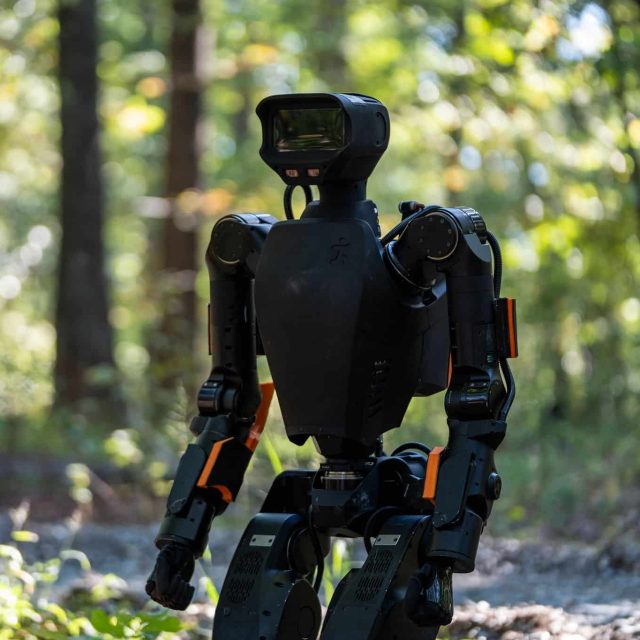
IHMC and its humanoid robot Alex won the demonstration stage of the U.S. Army’s xTechHumanoid competition that was held at the Marine Corps Base Quantico in Virginia. More than a hundred companies and institutes submitted proposals for the opportunity to demonstrate their humanoid technology to the U.S. military. Based on the papers that were submitted, the Army selected 10 organizations to travel to Quantico to demonstrate the capabilities of their humanoid robots. IHMC’s Alex stood out for its hybrid autonomy, which combines AI decision-making with human-operator control to perform complex missions. IHMC and four other organizations now advance to a structured evaluation phase where they will further demonstrate how their technologies can operate in complex environments that would otherwise put humans at risk. The final phase also includes an opportunity to secure a prototype evaluation contract with the U.S. Army. “It was great that out of more than 100 submissions we were selected as one of the top 10,” said Robert Griffin, a Senior Research Scientist who leads IHMC’s robotics group. “And, of course, we are all thrilled that we won the finals of the competition. Now we move on to an evaluation stage where we get to show how… Read More
STEM-Talk: Is AI out of control? Could it kill humanity? Ken Ford discusses the real and imagined risks of AI
Could AI kill all humanity? Will AI someday have consciousness similar to humans? How worried should we be about rogue AI agents? For STEM-Talk’s milestone 200th episode, Dr. Ken Ford sits down with Dr. Dawn Kernagis to answer these listener questions and more about the risks and advances of AI. After we posted episode 198, an Ask Me Anything episode where Ken answered listener questions about chatbots and data centers and the future of AI, we received a new wave of listener questions about AI that Ken addresses in episode 200. Ken has been working in AI since the 1980s and is well-positioned to address listener questions. The Association for the Advancement of Artificial Intelligence elected Ford a Fellow in 2000 for his “leadership in exploring and explaining foundational issues and in establishing large-scale AI research programs and institutions.” In today’s episode, Ken helps listeners sort genuine advances in AI from exaggerated claims. A few of the listener questions that Ken addresses in this episode include: — Ford’s thoughts about a team leader at Anthropic, the developer of the chatbot Claude, who shared a post that AI could someday “kill all humans”? — What evidence do we need that AI… Read More
STEM-Talk: Ken and Dawn tackle listener questions on protein, genetics, resistance training, Moon landings and more
STEM-Talk episode 199, which is now available on your favorite podcast apps, features Drs. Ken Ford and Dawn Kernagis answering a wide-range of listener questions in the second of a three-part Asking Me Anything episode. In part one of the AMA, episode 198, Dawn put a wide range of listener questions to Ken on artificial intelligence, which has dominated the news lately. Ken has been working in AI since the 1980s. The Association for the Advancement of Artificial Intelligence elected Ford a Fellow in 2000 for his “leadership in exploring and explaining foundational issues and in establishing large-scale AI research programs and institutions.” As a result, Ken is well-positioned to help listeners separate advances in AI from hype, panic and science fiction. Following the release of episode 198, listeners sent a new batch of questions related to AI, prompting the double-secret selection committee to authorize a third AMA, the upcoming episode 200, which also will focus exclusively on AI. In today’s episode, Dawn and Ken respond to listener questions that range from: — Whether there’s a critical difference between whey protein powders and ready-to-drink protein shakes? — Is there a sweat spot for how much time a person should spend… Read More
STEM-Talk: Ken Ford separates what’s real in AI from hype and science fiction
For the past year, artificial intelligence has dominated the headlines. Perhaps because there has been so much media and public interest, and so much anxiety and speculation about AI, STEM-Talk’s mailbox has been flooded with questions and concerns. In episode 198 of STEM-Talk, which is now available on your favorite podcast app, Dr. Dawn Kernagis puts a wide range of listener questions to Dr. Ken Ford in an Ask Me Anything episode focused exclusively on artificial intelligence. Ford has been working in AI since the 1980s. The Association for the Advancement of Artificial Intelligence elected Ford a fellow in 2000 for his “leadership in exploring and explaining foundational issues and in establishing large-scale AI research programs and institutions.” In today’s episode, he helps listeners sort genuine advances from exaggerated claims. A few listener questions Ford addresses in this AMA include: Is the panic over the enormous power demands of AI data centers overblown? Could putting data centers in orbit and powering them with solar energy help address AI’s growing demand for electricity? Are current AI models evolving beyond sophisticated prediction engines toward systems that can genuinely understand and reason? Is it a good idea to use earlier generations of AI… Read More
IHMC’s Morley Stone stepping down; Chief Science Officer Tim Broderick to become new CEO

Dr. Morley Stone announced he is stepping down as IHMC’s CEO at the end of September and will be replaced by Dr. Timothy Broderick, the institute’s Chief Science Officer. Broderick, who is an accomplished physician and researcher, is known for his contributions to the development and transition of biomedical technologies as a peer-reviewed investigator and expert in areas such as human health and performance, surgery, simulation and robotics. Prior to joining IHMC in 2019, Broderick was an academic surgeon and a program manager at the Defense Advanced Research Projects Agency (DARPA). “We really hate to lose Morley,” said IHMC Board Chairman Wes Reeder, an attorney at Emmanuel, Sheppard and Condon. “But we are very fortunate to have had someone like Tim already on staff and available to quickly take over the leadership of IHMC. With Tim at the helm, it will be an easy, seamless transition for the institute.” Stone is stepping into a new role as CEO of an Air Force spin-out company he helped found, Mined XAI. “My time at IHMC has been a wonderful experience,” said Stone. “But after 35 years in the public sector, I just felt it was time for a change in my career and… Read More
STEM-Talk: Dom D’Agostino discusses advances in ketogenic metabolic therapies and hyperbaric oxygen therapies

Dr. Dominic D’Agostino, who over the past 10 years has been a frequent guest on STEM-Talk, returns to the podcast to discuss his recent research into ketogenic metabolic therapies, ketone supplements and hyperbaric oxygen therapy for traumatic brain injuries. Dom is a Senior Visiting Research Scientist at IHMC as well as an Associate Professor in the Department of Molecular Pharmacology and Physiology at the University of South Florida’s Morsani College of Medicine. In addition to developing and testing metabolic-based therapies, Dom’s lab at South Florida also investigates seizure disorders, brain cancer, neurodegenerative diseases and rare genetic-metabolic disorders. In episode 196, which is now available on your favorite podcast apps, YouTube and IHMC’s website, STEM-Talk co-hosts Drs. Ken Ford and Dawn Kernagis, have a discussion with Dom about: — The science of ketogenic metabolic therapy (KMT) as a dietary approach to improve metabolic health. — His work with the Moffitt Cancer Center focusing on KMT as a way to enhance immune-based therapies for certain types of cancers. — The potential of KMT to treat high-grade gliomas, or brain cancers, such as glioblastoma, which is the most aggressive primary brain tumor in adults. — The mitochondrial stem cell connection theory (MSCC), which… Read More
IHMC’s new humanoid Alex aces its first off-site, off-tether demonstration
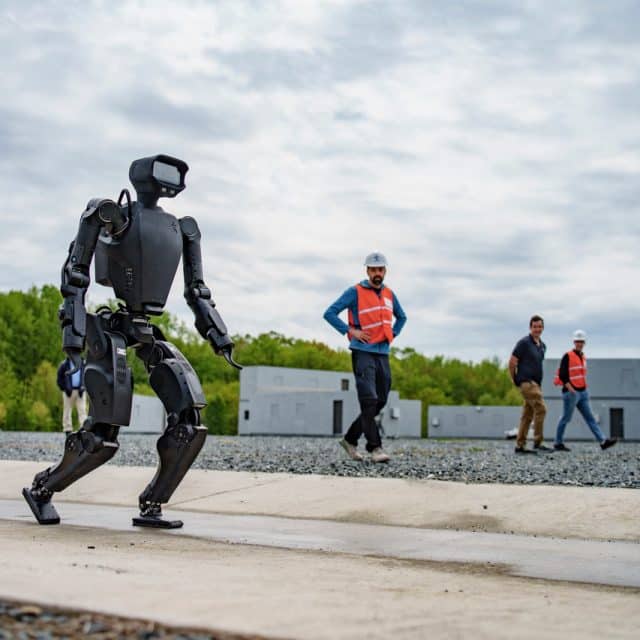
IHMC’s robotics team has just completed an off-site demonstration of its newly developed humanoid robot, Alex. “Things went really well,” said Senior Research Scientist Robert Griffin. “I believe the Office of Naval Research was impressed by the progress we’ve made over the past 10 months.” The Office of Naval Research (ONR) awarded IHMC a multi-year and multimillion-dollar contract to develop a robot capable of offsite and outdoor urban operations. The goal for Alex and its successors is to be nimble enough to operate in extreme environments, especially those involving military scenarios and disaster response where the risk for human casualty and injury is extremely high. “We are designing Alex so it will be able to walk up to a building, open a door, and walk around inside to assess a situation. The first soldier or responder who enters a building or warehouse is at a very high-risk of casualty. With Alex, our robot will be able to enter and assess these hazardous environments where human entry is extremely dangerous,” said Griffin. Lessons the robotics team gleaned from its work with Nadia have been incorporated into Alex. Nadia is an IHMC humanoid that advanced the robotics field and gained YouTube notoriety… Read More
A Letter From Our CEO
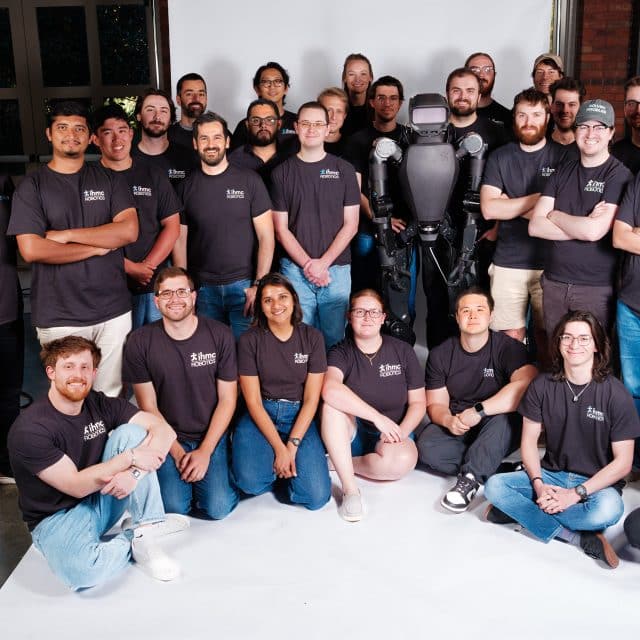
At IHMC, we are all about advancing the human condition and, as such, excited to bring you a more dynamic digital newsletter that will provide the most up-to-date information about the exciting work that goes on here at the institute. With this new format for the newsletter, we will be able to incorporate multimedia to better bring our research to life. For example, you will not only be able to read about our ground-breaking work, but also view videos of our research in action. In early April at our annual open house, IHMC’s robotics team unveiled Alex, our new advanced humanoid robot designed to step out of the lab and into real-world environments. The open house was the first opportunity for the public to meet and observe Alex. Just recently, our robotics group took Alex on the road for the first time for a demonstration before the Office of Naval Research, which awarded the institute a multi-year, multi-million-dollar contract to develop the next-generation humanoid robot. Even now, the most advanced humanoids are designed for the structured environments of labs and warehouses where they perform repetitive tasks that are simple compared to the demands of real-world environments and their changing conditions…. Read More
IHMC project helps pioneer new tools for warfighters
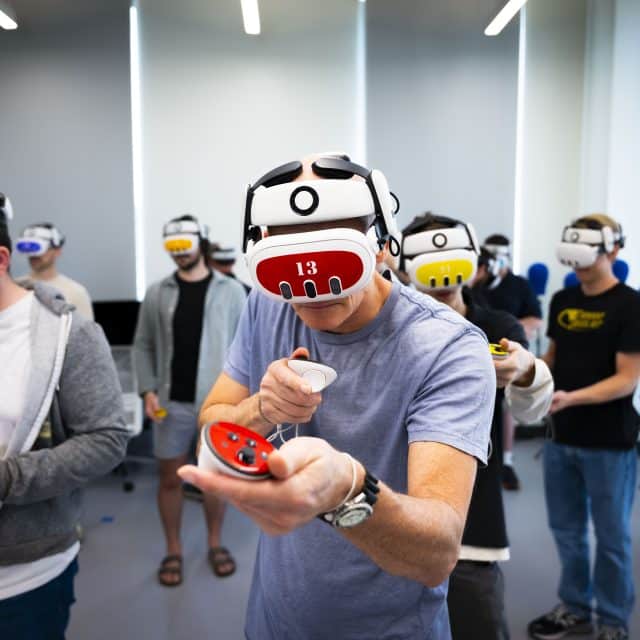
The Russian-Ukrainian War has evolved over the past four years into the world’s first drone military conflict. Ukraine turned to inexpensive off-the-shelf drones at the beginning of the war to combat Russia’s larger and better-equipped army. The off-the-shelf drones were so effective at tracking Russian troops and bombing enemy targets that Ukraine quickly created manufacturing assembly lines capable of producing a million drones a year. With support from the U.S., Ukraine began innovating the use of unmanned aerial vehicles (UAVs) that led to a new generation of sophisticated drones that have rapidly transformed the nature of warfare. These innovations in autonomous systems are now being deployed in Iran. As a result of the military conflicts in Ukraine and Iran, new technologies in drones and autonomous systems are being rolled out around the world at an unprecedented pace. To help pioneer new capabilities, IHMC launched a project called Workbench four years ago. It allows the US military to prototype new concepts and rapidly develop new tools and technologies for warfighters that could be deployed in the battlefield. Over the last four years, Workbench has expanded far beyond its original mission. “We’ve grown a lot over the last four years,” says Matt… Read More
STEM-Talk: Doug Cooke talks about strengths and flaws of NASA’s Artemis mission
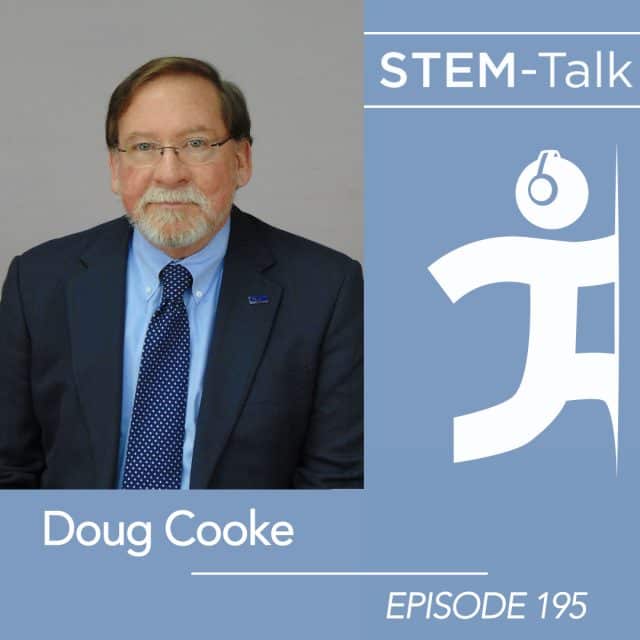
Four days after the astronauts of NASA’s Artemis II mission splashed down in the Pacific, STEM-Talk host Dr. Ken Ford interviewed Doug Cooke, an aerospace consultant who spent 38 years at NASA’s Johnson Space Center in Houston and NASA Headquarters in Washington, D.C. Ford, IHMC founder and a former Associate Director of NASA’s Center of Excellence in Information Technology, talked to Cooke about the Artemis mission’s 10-day roundtrip from the Earth to the Moon as well as NASA’s plans to return humans to the lunar surface by 2028. During his 38 years at NASA, Cooke played critical roles in the Space Shuttle, International Space Station and many other spaceflight programs. During the last three years of his NASA career, he served as Associate Administrator of the Exploration Systems Mission Directorate, which oversees the development of systems critical to NASA’s plans for human exploration of the Moon and Mars, including the Artemis program. Several times in his career, Doug served under Dr. Mike Griffin, our guest on episode 189, who served in a variety of senior leadership roles, including NASA Administrator. Mike and his colleague Dr. Lisa Porter shared their concerns in episode 189 that NASA’s Artemis program is seriously flawed… Read More
IHMC hosts national workshop on collaborative autonomy
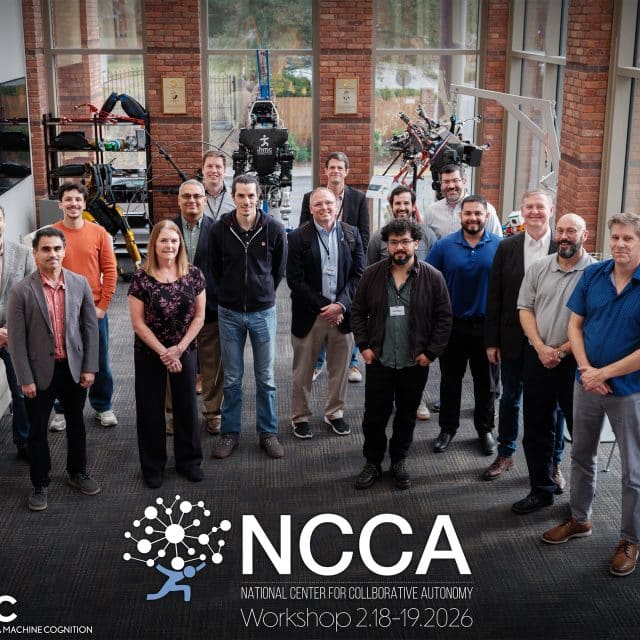
The nature of military conflicts has changed. In the past, drones and unmanned systems had a small impact. But as we are seeing in Iran and Ukraine, unmanned systems are now having a dominant impact. “It shouldn’t come as a surprise that drones and other unmanned autonomous systems are having a bigger impact than they did 10 years ago,” says IHMC Senior Research Scientist Matt Johnson. “It also should not be a surprise that if you can scale unmanned systems better, you will have a significant advantage in future conflicts.” The problem in terms of military conflicts is that each drone or unmanned platform is operated by one war fighter, says Niranjan Suri, a Senior Research Scientist and Associate Director at IHMC. “Right now, there’s typically one war fighter in the field driving one drone. But if you talk to people in Ukraine, they would like to launch 100,000 drones at the same time. The problem is they don’t have 100,000 pilots. This is why we need to get where a war fighter is not commanding a single unmanned autonomous vehicle, but commanding a whole fleet of drones and autonomous systems.” This in a nutshell is what IHMC’s newly created… Read More
Community turnout lifts IHMC clinical trial to a great start

Dr. Marcas Bamman likes to think of exercise as a miracle drug. “I’ve long believed that we need to leverage exercise as a true form of medicine,” says Bamman, a Senior Research Scientist at IHMC and Director of the Institute’s lab for Healthspan, Resilience and Performance Research. “If we could bottle exercise into a pill, it would be a miracle drug.” Right now, with Pensacola’s help, Bamman and his colleagues at IHMC are in the midst of a clinical trial designed to demonstrate exercise’s potential to slow down and even reverse the hallmarks of aging. Called Multidimensional Modeling to Maximize Adaptations to Exercise (M³AX), the clinical trial aims to provide evidence of exercise’s ability to improve the healthspan and quality of life of people ages 60 and older. Over a 30-year career, Bamman has been involved in healthspan studies and clinical trials around the world. He has worked to provide physicians and health-care providers with the evidence they need to leverage exercise as medicine. The M³AX trial that’s underway is a good example and it’s off to a great start thanks to the turnout and interest of Pensacola and the surrounding communities. “Our clinical trials are typically pretty demanding for… Read More
Two IHMC researchers named to top posts in worldwide organizations
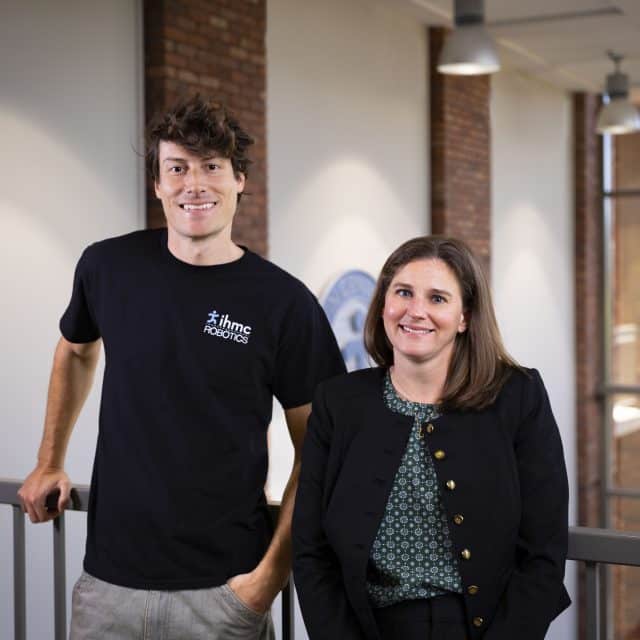
Drs. Nicole Rendos and Luigi Penco, a pair of up and coming research scientists at IHMC, were recently appointed to high-level positions in two of the nation’s most prestigious organizations representing scientists and researchers not only in the U.S., but around the world. The Southeast Chapter of the American College of Sports Medicine named Rendos its president for 2026 while Penco was appointed co-chair of the Institute of Electrical and Electronics Engineers Robotics and Automation Society’s Technical Committee on Telerobotics. “Nicole and Luigi have been fantastic additions to IHMC,” said IHMC CEO, Morley Stone. “It’s nice to see the two of them recognized not only by us, but also by two external organizations that represent some of the finest scientists in sports medicine and robotics around the world.” Rendos joined IHMC last year as a research scientist working with the institute’s Healthspan, Resilience and Performance Research team. In 2025, she served as president-elect of the Southeast Chapter of the American College of Sports Medicine and was the program chair for its 2026 Annual Meeting, which drew more than 1,300 members from 10 states and Puerto Rico. The American College of Sports Medicine is the largest exercise science and sports medicine… Read More
Public learns about robots, drones, virtual reality, Healthspan advances and more at open house

More than 500 people attended IHMC’s open house where the public had its first opportunity to see the robotics team’s new humanoid robot, Alex. The open house is held annually in conjunction with National Robotics Week, which was established by Congress in 2010 to give students, teachers and the public an opportunity to meet with scientists and engineers to learn about their work in robotics and technology. “We had a great turnout,” said IHMC COO Cassie Guilliams. “It was so rewarding to see how people, especially children, were fascinated with the work and research that goes on here at IHMC.” In addition to watching demonstrations of IHMC’s robots, visitors had opportunities to interact with dozens of IHMC scientists and engineers to learn about their research into drones, virtual reality, human performance, exoskeletons, artificial intelligence and other technologies. Visitors also found out about the new National Center for Collaborative Autonomy, an initiative focused on optimizing the abilities and potential of autonomous systems like unmanned aerial vehicles, self-driving cars and space probes. View photos from the event.
STEM-Talk: Tommy Wood shares science-backed strategies to enhance your mental sharpness
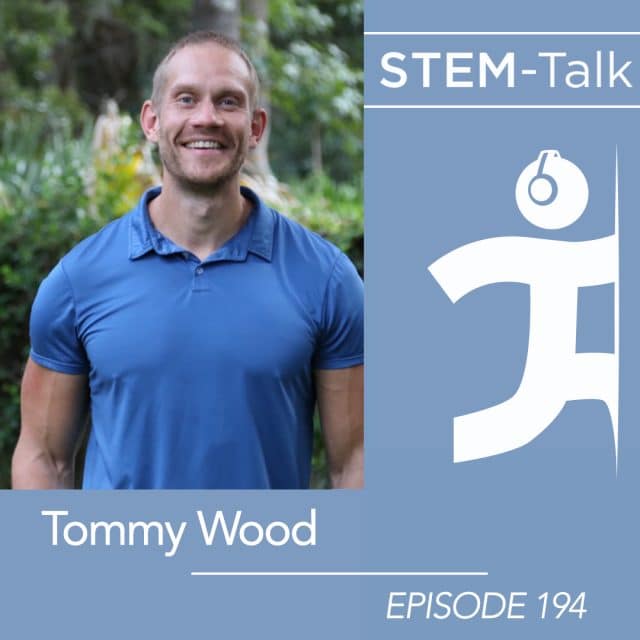
Dr. Tommy Wood rejoins Drs. Ken Ford and Dawn Kernagis for the second of his two-part interview about his just released book, “The Stimulated Mind: Future-Proof Your Brain from Dementia and Stay Sharp at Any Age.” Tommy is a neuroscientist and associate professor at the University of Washington where he runs a neuroscience lab. He also is a visiting research scientist at IHMC who has been a frequent STEM-Talk guest and occasional co-host. In today’s part two of his interview, Tommy shares science-backed strategies to enhance mental sharpness and prevent cognitive decline, including Alzheimer’s disease. Dawn and Ken talk to Tommy about how to future-proof our brains and the importance of diet and exercise for brain health. Tommy also emphasizes the importance of stimulating and challenging our brains by learning new things throughout our lifespans. In part one of his interview, episode 193, Tommy discussed the history of neuroscience as well as his mission to dispel the myth that the brain is doomed to decline with age. In episode 194, Tommy also talks about: — How what we eat has a direct effect on our long-term health and dementia risk. — The importance of nutrients and how women on average… Read More