

STEM-Talk: Ken and Dawn tackle listener questions on protein, genetics, resistance training, Moon landings and more
STEM-Talk episode 199, which is now available on your favorite podcast apps, features Drs. Ken Ford and Dawn Kernagis answering a wide-range of listener questions in the second of a three-part Asking Me Anything episode. In part one of the AMA, episode 198, Dawn put a wide range of listener questions to Ken on artificial intelligence, which has dominated the news lately. Ken has been working in AI since the 1980s. The Association for the Advancement of Artificial Intelligence elected Ford a Fellow in 2000 for his “leadership in exploring and explaining foundational issues and in establishing large-scale AI research programs and institutions.” As a result, Ken is well-positioned to help listeners separate advances in AI from hype, panic and science fiction. Following the release of episode 198, listeners sent a new batch of questions related to AI, prompting the double-secret selection committee to authorize a third AMA, the upcoming episode 200, which also will focus exclusively on AI. In today’s episode, Dawn and Ken respond to listener questions that range from: — Whether there’s a critical difference between whey protein powders and ready-to-drink protein shakes? — Is there a sweat spot for how much time a person should spend… Read More
STEM-Talk: Ken Ford separates what’s real in AI from hype and science fiction
For the past year, artificial intelligence has dominated the headlines. Perhaps because there has been so much media and public interest, and so much anxiety and speculation about AI, STEM-Talk’s mailbox has been flooded with questions and concerns. In episode 198 of STEM-Talk, which is now available on your favorite podcast app, Dr. Dawn Kernagis puts a wide range of listener questions to Dr. Ken Ford in an Ask Me Anything episode focused exclusively on artificial intelligence. Ford has been working in AI since the 1980s. The Association for the Advancement of Artificial Intelligence elected Ford a fellow in 2000 for his “leadership in exploring and explaining foundational issues and in establishing large-scale AI research programs and institutions.” In today’s episode, he helps listeners sort genuine advances from exaggerated claims. A few listener questions Ford addresses in this AMA include: Is the panic over the enormous power demands of AI data centers overblown? Could putting data centers in orbit and powering them with solar energy help address AI’s growing demand for electricity? Are current AI models evolving beyond sophisticated prediction engines toward systems that can genuinely understand and reason? Is it a good idea to use earlier generations of AI… Read More
IHMC’s Morley Stone stepping down; Chief Science Officer Tim Broderick to become new CEO

Dr. Morley Stone announced he is stepping down as IHMC’s CEO at the end of September and will be replaced by Dr. Timothy Broderick, the institute’s Chief Science Officer. Broderick, who is an accomplished physician and researcher, is known for his contributions to the development and transition of biomedical technologies as a peer-reviewed investigator and expert in areas such as human health and performance, surgery, simulation and robotics. Prior to joining IHMC in 2019, Broderick was an academic surgeon and a program manager at the Defense Advanced Research Projects Agency (DARPA). “We really hate to lose Morley,” said IHMC Board Chairman Wes Reeder, an attorney at Emmanuel, Sheppard and Condon. “But we are very fortunate to have had someone like Tim already on staff and available to quickly take over the leadership of IHMC. With Tim at the helm, it will be an easy, seamless transition for the institute.” Stone is stepping into a new role as CEO of an Air Force spin-out company he helped found, Mined XAI. “My time at IHMC has been a wonderful experience,” said Stone. “But after 35 years in the public sector, I just felt it was time for a change in my career and… Read More
STEM-Talk: Dom D’Agostino discusses advances in ketogenic metabolic therapies and hyperbaric oxygen therapies

Dr. Dominic D’Agostino, who over the past 10 years has been a frequent guest on STEM-Talk, returns to the podcast to discuss his recent research into ketogenic metabolic therapies, ketone supplements and hyperbaric oxygen therapy for traumatic brain injuries. Dom is a Senior Visiting Research Scientist at IHMC as well as an Associate Professor in the Department of Molecular Pharmacology and Physiology at the University of South Florida’s Morsani College of Medicine. In addition to developing and testing metabolic-based therapies, Dom’s lab at South Florida also investigates seizure disorders, brain cancer, neurodegenerative diseases and rare genetic-metabolic disorders. In episode 196, which is now available on your favorite podcast apps, YouTube and IHMC’s website, STEM-Talk co-hosts Drs. Ken Ford and Dawn Kernagis, have a discussion with Dom about: — The science of ketogenic metabolic therapy (KMT) as a dietary approach to improve metabolic health. — His work with the Moffitt Cancer Center focusing on KMT as a way to enhance immune-based therapies for certain types of cancers. — The potential of KMT to treat high-grade gliomas, or brain cancers, such as glioblastoma, which is the most aggressive primary brain tumor in adults. — The mitochondrial stem cell connection theory (MSCC), which… Read More
IHMC’s new humanoid Alex aces its first off-site, off-tether demonstration
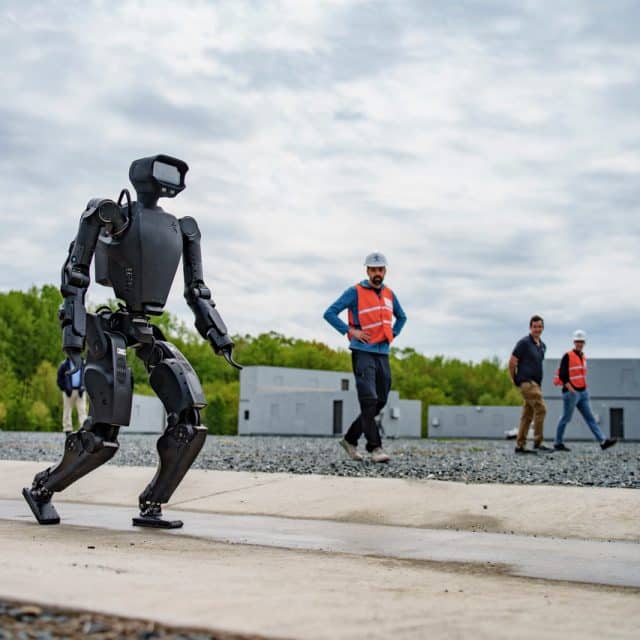
IHMC’s robotics team has just completed an off-site demonstration of its newly developed humanoid robot, Alex. “Things went really well,” said Senior Research Scientist Robert Griffin. “I believe the Office of Naval Research was impressed by the progress we’ve made over the past 10 months.” The Office of Naval Research (ONR) awarded IHMC a multi-year and multimillion-dollar contract to develop a robot capable of offsite and outdoor urban operations. The goal for Alex and its successors is to be nimble enough to operate in extreme environments, especially those involving military scenarios and disaster response where the risk for human casualty and injury is extremely high. “We are designing Alex so it will be able to walk up to a building, open a door, and walk around inside to assess a situation. The first soldier or responder who enters a building or warehouse is at a very high-risk of casualty. With Alex, our robot will be able to enter and assess these hazardous environments where human entry is extremely dangerous,” said Griffin. Lessons the robotics team gleaned from its work with Nadia have been incorporated into Alex. Nadia is an IHMC humanoid that advanced the robotics field and gained YouTube notoriety… Read More
A Letter From Our CEO
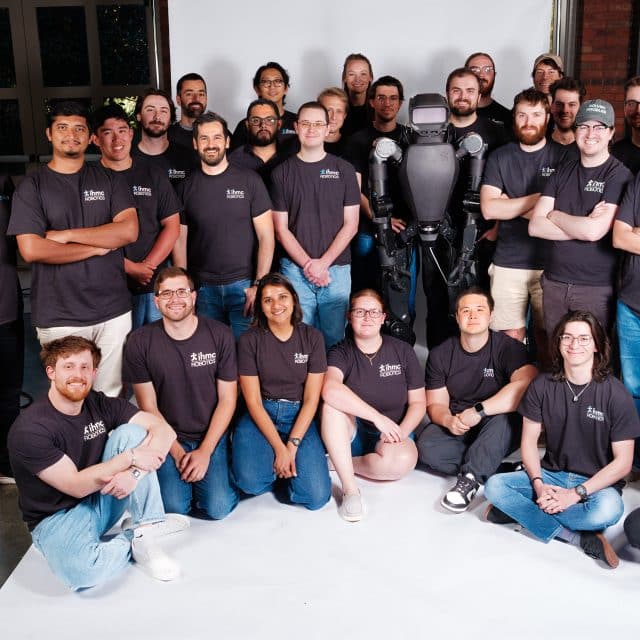
At IHMC, we are all about advancing the human condition and, as such, excited to bring you a more dynamic digital newsletter that will provide the most up-to-date information about the exciting work that goes on here at the institute. With this new format for the newsletter, we will be able to incorporate multimedia to better bring our research to life. For example, you will not only be able to read about our ground-breaking work, but also view videos of our research in action. In early April at our annual open house, IHMC’s robotics team unveiled Alex, our new advanced humanoid robot designed to step out of the lab and into real-world environments. The open house was the first opportunity for the public to meet and observe Alex. Just recently, our robotics group took Alex on the road for the first time for a demonstration before the Office of Naval Research, which awarded the institute a multi-year, multi-million-dollar contract to develop the next-generation humanoid robot. Even now, the most advanced humanoids are designed for the structured environments of labs and warehouses where they perform repetitive tasks that are simple compared to the demands of real-world environments and their changing conditions…. Read More
IHMC project helps pioneer new tools for warfighters
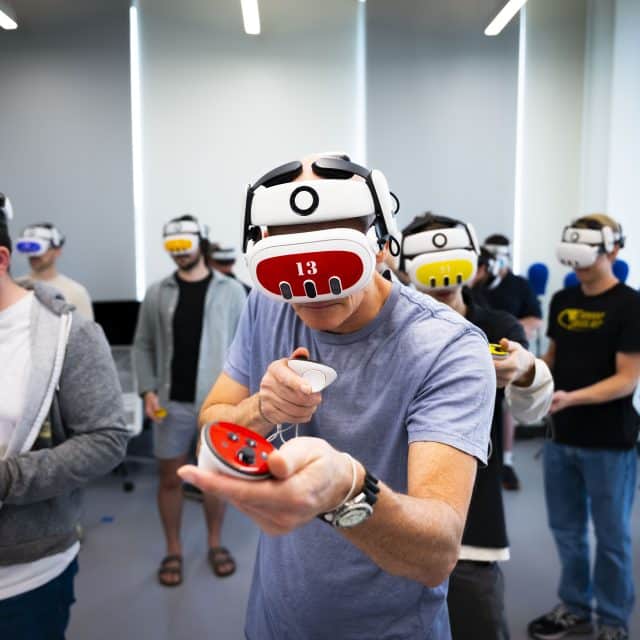
The Russian-Ukrainian War has evolved over the past four years into the world’s first drone military conflict. Ukraine turned to inexpensive off-the-shelf drones at the beginning of the war to combat Russia’s larger and better-equipped army. The off-the-shelf drones were so effective at tracking Russian troops and bombing enemy targets that Ukraine quickly created manufacturing assembly lines capable of producing a million drones a year. With support from the U.S., Ukraine began innovating the use of unmanned aerial vehicles (UAVs) that led to a new generation of sophisticated drones that have rapidly transformed the nature of warfare. These innovations in autonomous systems are now being deployed in Iran. As a result of the military conflicts in Ukraine and Iran, new technologies in drones and autonomous systems are being rolled out around the world at an unprecedented pace. To help pioneer new capabilities, IHMC launched a project called Workbench four years ago. It allows the US military to prototype new concepts and rapidly develop new tools and technologies for warfighters that could be deployed in the battlefield. Over the last four years, Workbench has expanded far beyond its original mission. “We’ve grown a lot over the last four years,” says Matt… Read More
STEM-Talk: Doug Cooke talks about strengths and flaws of NASA’s Artemis mission
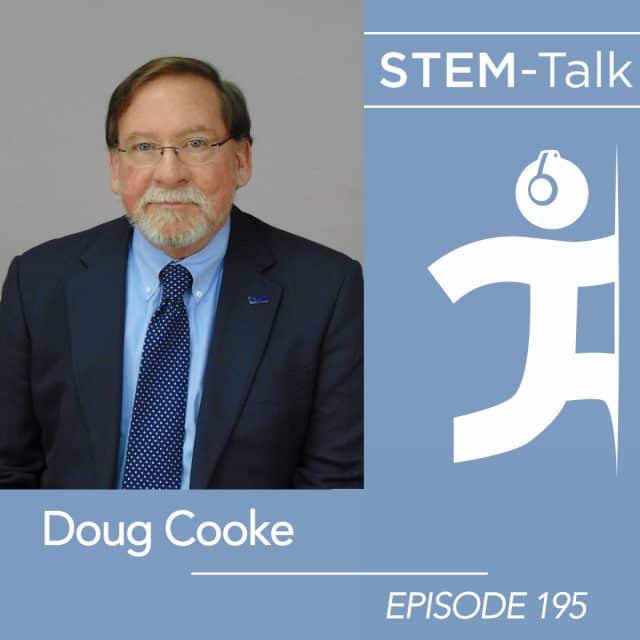
Four days after the astronauts of NASA’s Artemis II mission splashed down in the Pacific, STEM-Talk host Dr. Ken Ford interviewed Doug Cooke, an aerospace consultant who spent 38 years at NASA’s Johnson Space Center in Houston and NASA Headquarters in Washington, D.C. Ford, IHMC founder and a former Associate Director of NASA’s Center of Excellence in Information Technology, talked to Cooke about the Artemis mission’s 10-day roundtrip from the Earth to the Moon as well as NASA’s plans to return humans to the lunar surface by 2028. During his 38 years at NASA, Cooke played critical roles in the Space Shuttle, International Space Station and many other spaceflight programs. During the last three years of his NASA career, he served as Associate Administrator of the Exploration Systems Mission Directorate, which oversees the development of systems critical to NASA’s plans for human exploration of the Moon and Mars, including the Artemis program. Several times in his career, Doug served under Dr. Mike Griffin, our guest on episode 189, who served in a variety of senior leadership roles, including NASA Administrator. Mike and his colleague Dr. Lisa Porter shared their concerns in episode 189 that NASA’s Artemis program is seriously flawed… Read More
IHMC hosts national workshop on collaborative autonomy
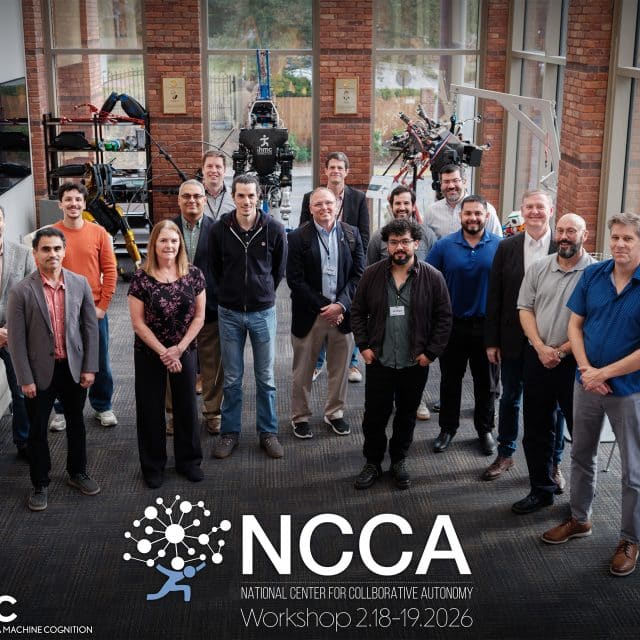
The nature of military conflicts has changed. In the past, drones and unmanned systems had a small impact. But as we are seeing in Iran and Ukraine, unmanned systems are now having a dominant impact. “It shouldn’t come as a surprise that drones and other unmanned autonomous systems are having a bigger impact than they did 10 years ago,” says IHMC Senior Research Scientist Matt Johnson. “It also should not be a surprise that if you can scale unmanned systems better, you will have a significant advantage in future conflicts.” The problem in terms of military conflicts is that each drone or unmanned platform is operated by one war fighter, says Niranjan Suri, a Senior Research Scientist and Associate Director at IHMC. “Right now, there’s typically one war fighter in the field driving one drone. But if you talk to people in Ukraine, they would like to launch 100,000 drones at the same time. The problem is they don’t have 100,000 pilots. This is why we need to get where a war fighter is not commanding a single unmanned autonomous vehicle, but commanding a whole fleet of drones and autonomous systems.” This in a nutshell is what IHMC’s newly created… Read More
Community turnout lifts IHMC clinical trial to a great start

Dr. Marcas Bamman likes to think of exercise as a miracle drug. “I’ve long believed that we need to leverage exercise as a true form of medicine,” says Bamman, a Senior Research Scientist at IHMC and Director of the Institute’s lab for Healthspan, Resilience and Performance Research. “If we could bottle exercise into a pill, it would be a miracle drug.” Right now, with Pensacola’s help, Bamman and his colleagues at IHMC are in the midst of a clinical trial designed to demonstrate exercise’s potential to slow down and even reverse the hallmarks of aging. Called Multidimensional Modeling to Maximize Adaptations to Exercise (M³AX), the clinical trial aims to provide evidence of exercise’s ability to improve the healthspan and quality of life of people ages 60 and older. Over a 30-year career, Bamman has been involved in healthspan studies and clinical trials around the world. He has worked to provide physicians and health-care providers with the evidence they need to leverage exercise as medicine. The M³AX trial that’s underway is a good example and it’s off to a great start thanks to the turnout and interest of Pensacola and the surrounding communities. “Our clinical trials are typically pretty demanding for… Read More
Two IHMC researchers named to top posts in worldwide organizations
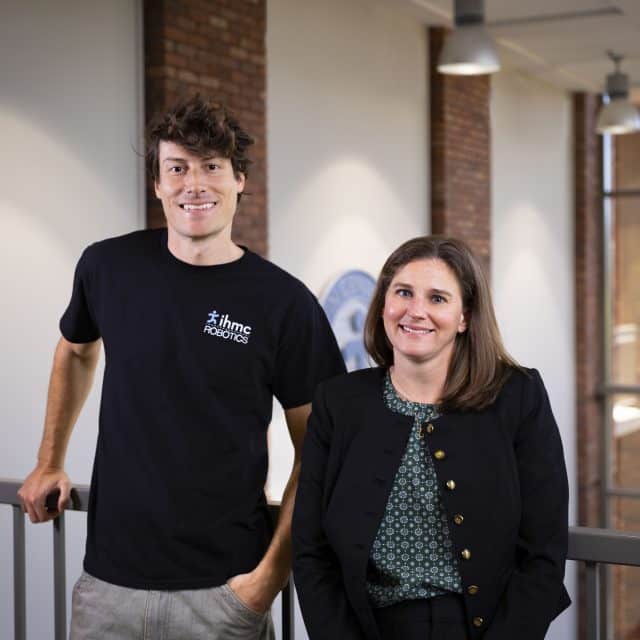
Drs. Nicole Rendos and Luigi Penco, a pair of up and coming research scientists at IHMC, were recently appointed to high-level positions in two of the nation’s most prestigious organizations representing scientists and researchers not only in the U.S., but around the world. The Southeast Chapter of the American College of Sports Medicine named Rendos its president for 2026 while Penco was appointed co-chair of the Institute of Electrical and Electronics Engineers Robotics and Automation Society’s Technical Committee on Telerobotics. “Nicole and Luigi have been fantastic additions to IHMC,” said IHMC CEO, Morley Stone. “It’s nice to see the two of them recognized not only by us, but also by two external organizations that represent some of the finest scientists in sports medicine and robotics around the world.” Rendos joined IHMC last year as a research scientist working with the institute’s Healthspan, Resilience and Performance Research team. In 2025, she served as president-elect of the Southeast Chapter of the American College of Sports Medicine and was the program chair for its 2026 Annual Meeting, which drew more than 1,300 members from 10 states and Puerto Rico. The American College of Sports Medicine is the largest exercise science and sports medicine… Read More
Public learns about robots, drones, virtual reality, Healthspan advances and more at open house

More than 500 people attended IHMC’s open house where the public had its first opportunity to see the robotics team’s new humanoid robot, Alex. The open house is held annually in conjunction with National Robotics Week, which was established by Congress in 2010 to give students, teachers and the public an opportunity to meet with scientists and engineers to learn about their work in robotics and technology. “We had a great turnout,” said IHMC COO Cassie Guilliams. “It was so rewarding to see how people, especially children, were fascinated with the work and research that goes on here at IHMC.” In addition to watching demonstrations of IHMC’s robots, visitors had opportunities to interact with dozens of IHMC scientists and engineers to learn about their research into drones, virtual reality, human performance, exoskeletons, artificial intelligence and other technologies. Visitors also found out about the new National Center for Collaborative Autonomy, an initiative focused on optimizing the abilities and potential of autonomous systems like unmanned aerial vehicles, self-driving cars and space probes. View photos from the event.
STEM-Talk: Tommy Wood shares science-backed strategies to enhance your mental sharpness
Dr. Tommy Wood rejoins Drs. Ken Ford and Dawn Kernagis for the second of his two-part interview about his just released book, “The Stimulated Mind: Future-Proof Your Brain from Dementia and Stay Sharp at Any Age.” Tommy is a neuroscientist and associate professor at the University of Washington where he runs a neuroscience lab. He also is a visiting research scientist at IHMC who has been a frequent STEM-Talk guest and occasional co-host. In today’s part two of his interview, Tommy shares science-backed strategies to enhance mental sharpness and prevent cognitive decline, including Alzheimer’s disease. Dawn and Ken talk to Tommy about how to future-proof our brains and the importance of diet and exercise for brain health. Tommy also emphasizes the importance of stimulating and challenging our brains by learning new things throughout our lifespans. In part one of his interview, episode 193, Tommy discussed the history of neuroscience as well as his mission to dispel the myth that the brain is doomed to decline with age. In episode 194, Tommy also talks about: — How what we eat has a direct effect on our long-term health and dementia risk. — The importance of nutrients and how women on average… Read More
IHMC open house unveils the robotics team’s new advanced humanoid Alex
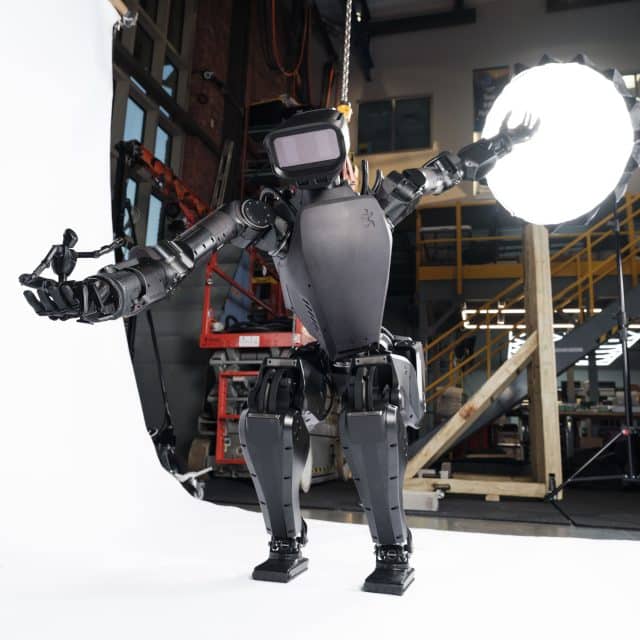
At this year’s IHMC open house on April 10, the public will have its first opportunity to meet Alex, the institute’s new advanced humanoid robot. “We are so excited to show off Alex,” said Senior Research Scientist Robert Griffin, who leads HMC’s robotics group. “Alex has been developed to step outside of the lab and perform in real-world environments. It’s a big step for us. The maneuverability, autonomy and search skills of Alex will allow it to serve as a human avatar for first responders in emergency situations.” Alex is built upon the cutting–edge research that IHMC did with Nadia, a humanoid that entertained last year’s open-house visitors by playing ping pong with members of the robotics staff. Although Alex features next-generation technology and capabilities, it lacks one very important thing: a face. “At the open house, children are invited to put on their engineer–designer hats and imagine what Alex’s face would look like,” said Robotics Lab Coordinator Claudia Artzer. “The most creative ideas will be chosen, celebrated by the Robotics team, and brought to life as a 3D replica. We’re hoping that children will be able to inspire us come up with creative concepts.” In addition to being able… Read More
STEM-Talk: Tommy Wood discusses his new book and the adaptability of the aging brain
Today Dr. Tommy Wood joins Drs. Ken Ford and Dawn Kernagis to talk about his book, “The Stimulated Mind: Future-Proof Your Brain from Dementia and Stay Sharp at Any Age.” Tommy is an associate professor at the University of Washington where he runs a neuroscience lab. He also is a visiting research scientist at IHMC who has been a frequent STEM-Talk guest and occasional co-host. In today’s part one of his two-part interview, we talk to Tommy about his mission to dispel the myth that the brain is doomed to decline with age. “The Stimulated Mind” offers science-backed strategies to enhance mental sharpness and prevent cognitive decline, including Alzheimer’s disease. In part one of our interview, Tommy discusses: How neuroscientists study the brain. Dispels the conventional belief that the brain is fixed by the time we reach our twenties and incapable of change. Provides examples of the adaptability of the adult brain. Talks about Santiago Ramón y Cajal, who is considered the first neuroscientist. The importance of cardiovascular health in brain health. A history of Alzheimer’s disease. What we know about age-related dementia. In the upcoming part two of Tommy’s interview, Tommy shares ways that people can stimulate neuroplasticity in… Read More
STEM-Talk: Francisco Gonzalez-Lima on methylene blue and noninvasive brain stimulation
Dr. Francisco Gonzalez-Lima appeared on STEM-Talk five years ago to share his research into Alzheimer’s disease and how low-dose methylene blue as well as the application of near-infrared light can protect people from neurodegeneration. Since then, he and his colleagues at the Gonzalez-Lima lab have produced dozens of more studies and papers that have advanced their research. Today, Gonzalez-Lima returns to STEM-Talk in episode 191 to give us an update on his continuing investigations into methylene blue and the use of transcranial lasers for neuroprotection and the treatment of neurocognitive disorders. Francisco and his lab at the University of Texas Austin are recognized as world leaders for their research into the relationships between brain energy metabolism, memory and neurobehavioral disorders. In today’s interview with STEM-Talk hosts Dr. Ken Ford and Dawn Kernagis, Gonzalez-Lima talks about: The beneficial neurocognitive and emotional effects of noninvasive human brain stimulation in healthy, aging and mentally ill populations. The safety of methylene blue to treat diminishing cognitive function. The use of methylene blue and ketones to treat vascular hypometabolism in Alzheimer’s disease. The use transcranial infrared laser stimulation for cognitive enhancement. And the impact of mitochondrial disfunction on neurodegeneration. STEM-Talk is an award-winning podcast from… Read More
STEM-Talk: Judith Curry and the Consequences of Climate Alarmism

Dr. Judith Curry, a climatologist known for her criticism of alarmist doomsday rhetoric about climate change, returns to STEM-Talk for her second appearance. Curry was one of five researchers commissioned by the Department of Energy last year to draft a Climate Assessment Report summarizing the current state of climate science, particularly with a focus on how it relates to the United States. In Curry’s interview today, episode 190, STEM-Talk host Ken Ford has a conversation with Curry about the climate report’s key points, including the finding that carbon-dioxide induced warming of the planet appears to be less damaging economically than has been commonly believed. The report, which was released this past summer, also argues that aggressive mitigation strategies for carbon dioxide emissions could be more harmful than helpful. Today’s interview, which is now available on podcast apps, YouTube and on IHMC’s website, comes on the heels of the prestigious journal Nature retracting a study that predicted climate change and carbon emissions would cause catastrophic economic damage by the end of the century. Curry’s interview also follows an about-face from Microsoft co-founder Bill Gates who wrote a memo back in October arguing it’s time to tamp down the alarmist rhetoric that… Read More
STEM-Talk: NASA’s Flawed Plan to Return to the Moon – with Mike Griffin and Lisa Porter

The United States risks losing the race to return humans to the Moon to the People’s Republic of China, which will pose serious threats to our national security. This is one of the key takeaways of STEM-Talk Episode 189, which features a conversation with Drs. Michael Griffin and Lisa Porter, two scientists with extensive backgrounds at NASA, the Department of Defense and in national security issues. IHMC’s founder and CEO Emeritus Dr. Ken Ford’s timely interview with Griffin and Porter came just 10 days before Griffin appeared before the U.S. House Committee on Science, Space and Technology to give testimony on China’s advancements in space and the risks it poses for the U.S. “We have squandered a 60-year head start on pioneering the space frontier to a nation that, without reason or provocation on our part, has chosen to become our nation’s adversary,” said Griffin in his opening comments to Congress. Ford’s interview with Griffin and Porter is now available on podcast apps, YouTube and on IHMC’s website. Another key takeaway of the interview is that NASA’s Artemis III Misson to return to the Moon and build a permanent lunar base is seriously flawed and should be scrapped. Griffin and… Read More
IHMC partners with Conduit Venture Labs to accelerate commercialization efforts

The Florida Institute for Human & Machine Cognition (IHMC) has entered into a strategic partnership with Conduit Venture Labs, a venture studio leader in venture creation and deep-tech commercialization in physical artificial intelligence, the acceleration and commercialization of frontier technologies emerging from IHMC’s research. The engagement is designed to broaden IHMC’s real-world impact across defense and commercial markets while creating new pathways for revenue generation to support IHMC’s long-term research mission to advance and elevate the human condition. IHMC has pioneered advancements in exoskeletons, human-machine teaming, embodied AI, and physical system intelligence. Through this partnership, Conduit will apply its venture-building methodology to evaluate commercialization pathways for select technologies, with strategies spanning direct licensing to new venture creation. Dr. Morley Stone, IHMC’s chief executive officer, says the collaboration furthers the Institute’s commitment to advancing the frontier of human and machine teaming performance. “To continue pushing that frontier, we must pair world-class research with world-class commercialization. Conduit brings the expertise needed to translate our breakthroughs into real-world impact and meaningful market outcomes,” Stone says. A convergence of factors is driving the critical need for commercialization in physical AI — the fusion of software intelligence with embodied systems such as robots, wearables, autonomous… Read More
Research platforms aim to better support military personnel in high-stress environments
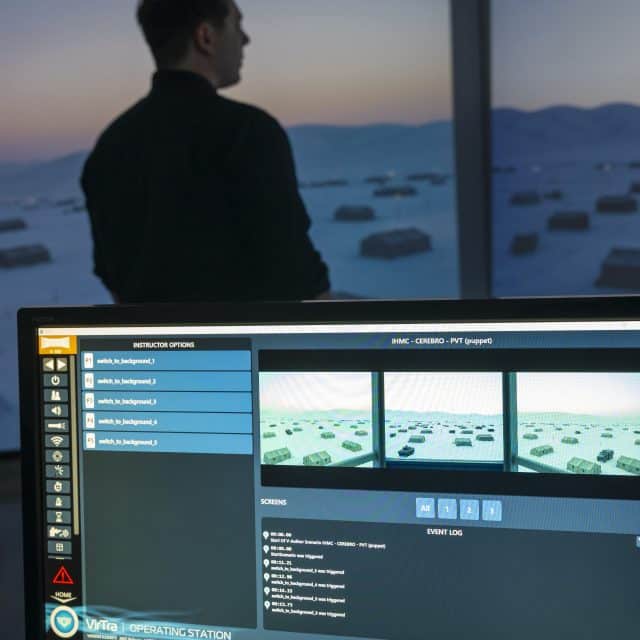
Operational medicine is a common theme in Dr. Jeff Phillips’ research. His expertise in the effect of common aviation stressors (i.e. hypoxia) on operator performance dates back decades. In this newest iteration of his work, Phillips and his team are researching ways to support military operations and maximize human potential in extreme environments. The goal of a servicemember making better decisions and reacting faster in a challenging scenario calls for a new generation of psychometric tests that gather human performance metrics. Two recent projects Phillips has led at the Florida Institute for Human and Machine Cognition (IHMC) have shown promise to elicit and track the data needed to make the next generation of warfighters safer and better able to perform tasks with immense physical and cognitive demands in extreme environments. “What we’re doing here is trying to make psychometric tools that fit the bill for these specific stressors and states that we’re interested in,” Phillips says. “The traditional battery of psychometric tests do not measure tasks that are germane to flying or to the real-world demands that special operations ground forces encounter.” Take for example, hypoxia. “If I expose you to 25,000 feet or the equivalent barometric pressure, I have… Read More