

A Letter From Our CEO
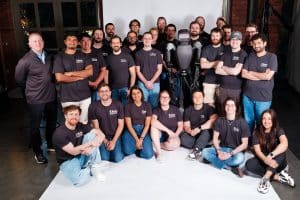 At IHMC, we are all about advancing the human condition and, as such, excited to bring you a more dynamic digital newsletter that will provide the most up-to-date information about the exciting work that goes on here at the institute. With this new format for the newsletter, we will be able to incorporate multimedia to better bring our research to life. For example, you will not only be able to read about our ground-breaking work, but also view videos of our research in action.
In early April at our annual open house, IHMC’s robotics team unveiled Alex, our new advanced humanoid robot designed to step out of the lab and into real-world environments. The open house was the first opportunity for the public to meet and observe Alex.
Just recently, our robotics group took Alex on the road for the first time for a demonstration before the Office of Naval Research, which awarded the institute a multi-year, multi-million-dollar contract to develop the next-generation humanoid robot. Even now, the most advanced humanoids are designed for the structured environments of labs and warehouses where they perform repetitive tasks that are simple compared to the demands of real-world environments and their changing conditions. Alex represents a new era of nimble, adaptive humanoids that builds upon years of foundational work by our robotics team.
In this edition of the newsletter, you also will learn about:
— How our National Center for Collaborate Autonomy hosted its inaugural workshop with participants from across the United States. Back in January of this year, I had the opportunity to talk to different Congressional offices. A topic on everyone’s mind was how the future of all military conflicts, as we’re now seeing in Ukraine, will be dictated by autonomous systems like drones and unmanned vehicles. The NCCA was created to advance research in collaborative autonomy – not only between autonomous agents, but more importantly push the frontiers of human-machine teaming.
— An IHMC project focused on leveraging the power of simulation and virtual reality to fit the mission needs of warfighters out in the field. The project, titled Workbench, is designed to reshape how we test new technology and validate new products before training teams to effectively deploy the new technology in various warfighter situations.
— An update on our clinical trial supported by NIH, which is investigating how a potent personalized exercise program can mitigate age-related functional decline and other hallmarks of aging. As a multi-site trial with partners at the University of Florida and Oklahoma Medical Research Foundation, more than 150 people in the Pensacola area have taken part so far as research participants in the trial, which is investigating the physiological benefits of exercise for an aging population, and understanding the molecular basis for individual differences in response.
— And a roundup of other news happening at IHMC, including events and new hires and a couple of prestigious leadership appointments for two of our research scientists.
I hope you enjoy this revamped newsletter and will help us spread the word about the exciting and game-changing research being conducted at our Pensacola and Ocala campuses. – Morley Stone
Latest News
- STEM-Talk: Ken and Dawn tackle listener questions on protein, genetics, resistance training, Moon landings and more
- STEM-Talk: Ken Ford separates what’s real in AI from hype and science fiction
- IHMC’s Morley Stone stepping down; Chief Science Officer Tim Broderick to become new CEO
- STEM-Talk: Dom D’Agostino discusses advances in ketogenic metabolic therapies and hyperbaric oxygen therapies
- IHMC’s new humanoid Alex aces its first off-site, off-tether demonstration
- A Letter From Our CEO
- IHMC project helps pioneer new tools for warfighters
- STEM-Talk: Doug Cooke talks about strengths and flaws of NASA’s Artemis mission
- IHMC hosts national workshop on collaborative autonomy