

Toshiya Miyatsu
Research Scientist
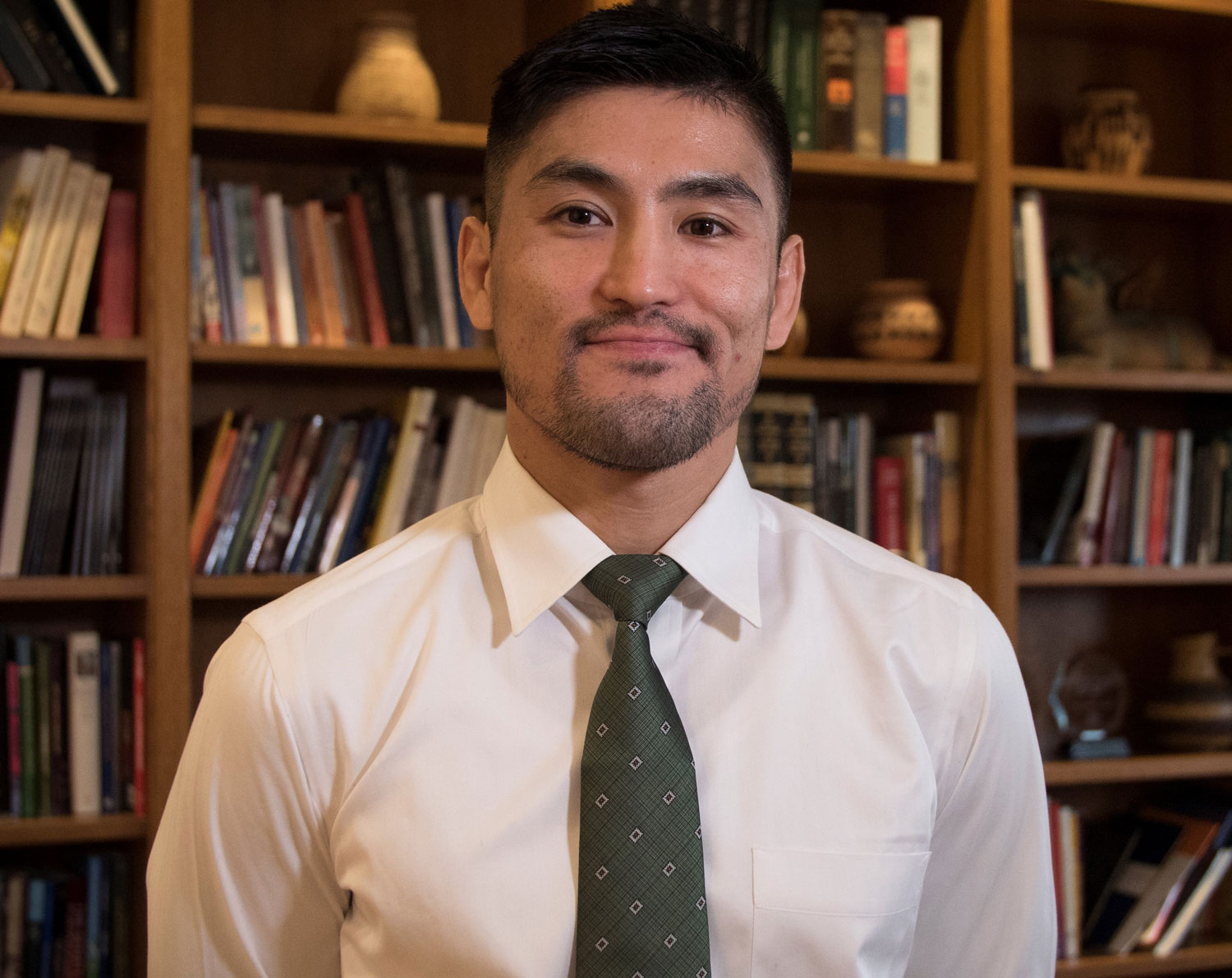
Dr. Toshiya Miyatsu joined IHMC as a Research Scientist in January 2020. He earned his Ph.D. and M.A. in Psychological and Brain Sciences from Washington University in St. Louis and his B.A. in Psychology from the University of California, Los Angeles.
Dr. Miyatsu studies how sleep, neurophysiology, metabolism, and behavior interact to shape human health, cognition, and performance. His research integrates multimodal physiological sensing, cognitive neuroscience, neuromodulation, and machine learning to develop continuous, field-deployable approaches for characterizing human physiological state across sleep and wake. A central goal of his work is to move beyond isolated laboratory measurements and single summary scores toward longitudinal assessment of the dynamic physiological processes that underlie individual differences in sleep, resilience, and cognitive function.
His work combines commercial wearable technologies with research-grade measurements including EEG, EOG, ECG, PPG, continuous glucose and ketone monitoring, inertial sensing, and behavioral and cognitive assessment. He applies statistical and machine-learning methods to these multimodal data to identify interpretable physiological signatures, characterize within-person dynamics, and determine which measurements are most useful for understanding individual differences and informing the selection and evaluation of interventions.
Recent studies illustrate this approach in naturalistic settings. During U.S. Special Operations Forces high-altitude mountaineering training, his team used wearable sensors to track multi-night sleep, autonomic physiology, respiration, and physical activity and examined their relationships with cognitive performance under extreme environmental demands. In separate work, his team integrated continuous ketone and glucose monitoring with wearable sleep measurement to characterize metabolic responses to ketone supplementation during everyday life and their relationships with sleep and physiological readiness. Together, these studies reflect a broader effort to connect nighttime physiology with daytime biological and behavioral function through continuous multimodal measurement.
Dr. Miyatsu has served as a PI, co-PI, or scientific lead on federally funded research supported by DARPA, U.S. Special Operations Command, the Air Force Research Laboratory, and other agencies. In DARPA RESTORE Multimodal Optimization and Restoration Platform for Homeostatic Enhancement Under Sleep-restriction (MORPHEUS), he investigated multimodal approaches—including noninvasive vagus nerve stimulation, auditory stimulation, and photomodulation—to improve sleep efficiency and preserve cognitive function during severe sleep restriction. His broader research examines physiological and cognitive responses to stress, hypoxia, fatigue, intense physical activity, and mild traumatic brain injury.
A complementary area of his research investigates noninvasive neuromodulation for influencing learning, attention, fatigue, autonomic physiology, and resilience. Within DARPA’s Learning through Electrical Augmentation of Plasticity (LEAP) program, he led experiments examining transcutaneous cervical vagus nerve stimulation for enhancing foreign-language learning. His broader neuromodulation work examines how stimulation can influence learning, cognitive performance, autonomic physiology, and resilience, with increasing emphasis on linking intervention effects to measurable physiological mechanisms.
Before joining IHMC, Dr. Miyatsu served as a graduate research associate at Washington University in St. Louis and as a laboratory manager and research technician at UCLA. He conducted cognitive psychological research funded by the National Science Foundation, the James S. McDonnell Foundation, and other agencies, leading projects on retrieval-induced forgetting, category learning, multimedia learning, study strategies, and mnemonics. His work has appeared in leading journals such as Psychological Bulletin, Perspectives on Psychological Science, Journal of Experimental Psychology: Learning, Memory, & Cognition, and Journal of Experimental Psychology: Applied.
Originally from Tokyo, Japan, Toshi moved to the United States in 2006 and became a U.S. citizen in 2018. A Brazilian jiu-jitsu black belt and eight-time mixed martial arts competitor, he continues to train across multiple martial arts disciplines and maintains a generalist movement practice. He enjoys life in Pensacola, FL, with his wife Rose, their son Jimmy, and their pet tortoise Chekhov.