

Cristian Nino
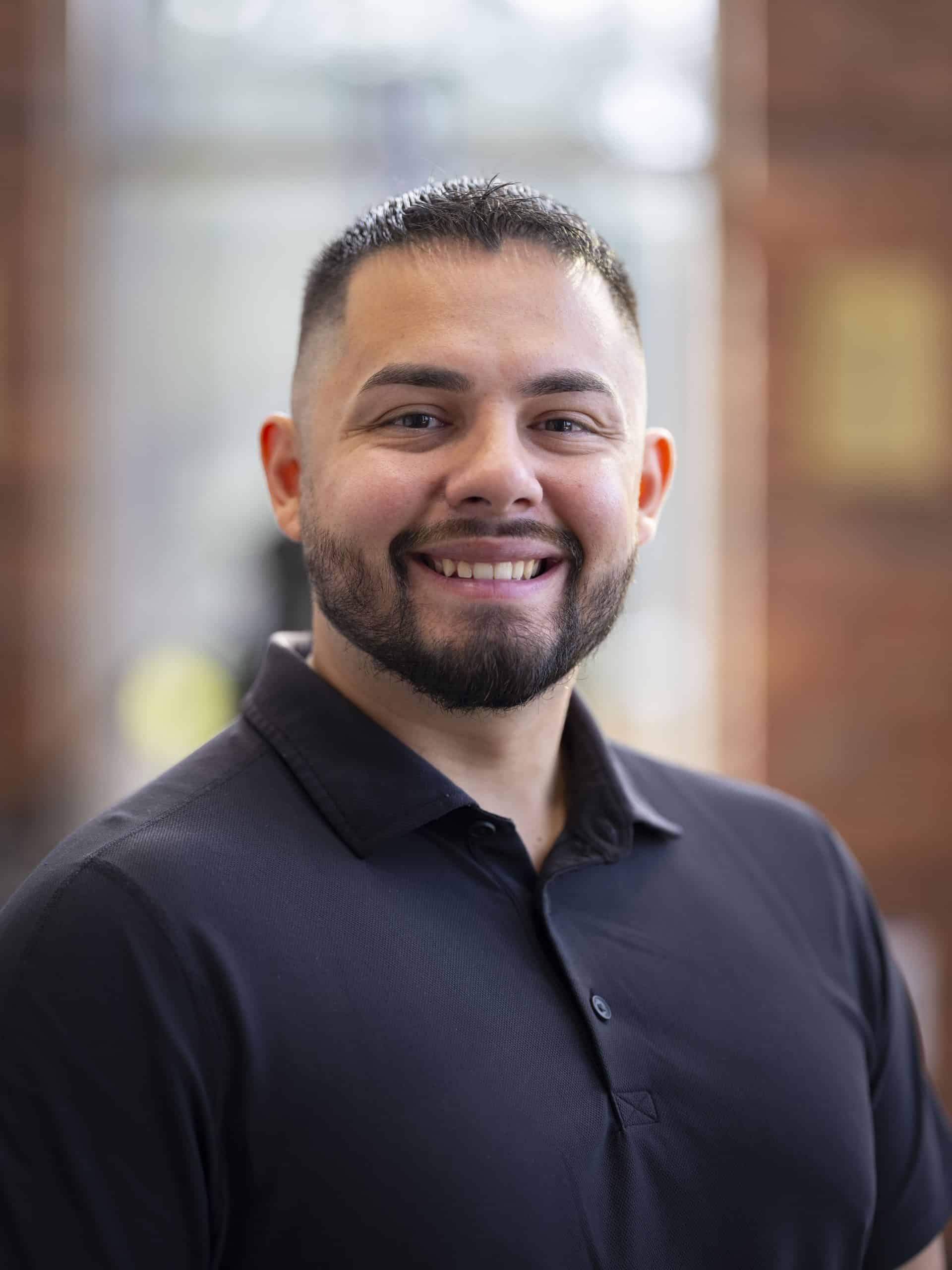
Research Scientist
Cristian F. Nino is a Research Scientist at the National Center for Collaborative Autonomy (NCCA) at IHMC, where he focuses on collaborative autonomy. His research spans robust, adaptive nonlinear control and multi-agent systems, with applications to distributed target tracking, distributed state and parameter estimation, and guidance, navigation, and control.
Cristian has developed and experimentally validated adaptive autonomy for unmanned aerial systems, including autonomous quadrotor flight using robust adaptive controllers at the Eglin Air Force Base Aviary and outdoor flight demonstrations at the University of Florida Autonomy Park using a ResNet-based adaptive controller. He has also contributed to sim-to-real quadrotor development using Webots, including safety-barrier-based methods to support safer transfer from simulation to hardware.
In addition to control-theoretic methods, Cristian studies learning-theoretic tools for safety-critical assured autonomy, including reinforcement learning, Lyapunov-based deep learning, and spatiotemporal graph models. His open-source work includes an online adaptive ResNet implemented in Python (without external libraries), used in multiple University of Florida experiments, as well as a nonlinear adaptive DNN implemented in C (without external libraries), used in AFRL-supported experiments.
Cristian earned his Ph.D. in Mechanical Engineering from the University of Florida in 2025, advised by Dr. Warren E. Dixon, with a dissertation titled “Distributed Target Tracking in Nonlinear Multi-Agent Systems.” He earned an M.S. in Mechanical Engineering and a graduate certificate in control systems from the University of Florida in 2024, and dual B.S. degrees in Mechanical Engineering (design and manufacturing focus) and Mathematics from the University of Florida in 2021. His work has been supported by the DoD SMART Scholarship, the NSF RUI program, and the Machen Florida Opportunity Scholarship, and he received a Graduate Research Award.
Looking ahead, Cristian is pursuing a research thrust in physics-constrained autonomous adaptation for resilient unmanned systems—embedding physical laws directly into online identification and adaptation so platforms can learn rapidly from short, tactical maneuvers while remaining within safety-critical envelopes. This direction emphasizes modular, analytically grounded methods that can integrate into existing autonomy stacks and support real-time recovery under uncertainty and off-nominal conditions.
A second research thrust in Cristian’s work is the development of a unified, sheaf-theoretic framework for multi-objective, multi-agent coordination. This effort uses cellular sheaves and sheaf Laplacians to organize coordination problems that are difficult to scale with case-by-case designs, such as decentralized operation under constrained sensing and communication. This thrust also connects geometric and safety constraints to coordination, including mesh-based and manifold-aware safety, to support navigation and control in complex environments beyond simple Euclidean geometries.
Outside of work, Cristian enjoys running, hiking, swimming, lifting, and training Muay Thai and Jiu Jitsu.