

STEM-Talk: Ken Ford separates what’s real in AI from hype and science fiction
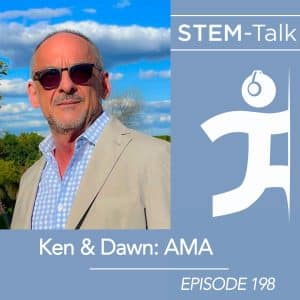 For the past year, artificial intelligence has dominated the headlines. Perhaps because there has been so much media and public interest, and so much anxiety and speculation about AI, STEM-Talk’s mailbox has been flooded with questions and concerns.
In episode 198 of STEM-Talk, which is now available on your favorite podcast app, Dr. Dawn Kernagis puts a wide range of listener questions to Dr. Ken Ford in an Ask Me Anything episode focused exclusively on artificial intelligence.
Ford has been working in AI since the 1980s. The Association for the Advancement of Artificial Intelligence elected Ford a fellow in 2000 for his “leadership in exploring and explaining foundational issues and in establishing large-scale AI research programs and institutions.” In today’s episode, he helps listeners sort genuine advances from exaggerated claims.
A few listener questions Ford addresses in this AMA include:
- Is the panic over the enormous power demands of AI data centers overblown?
- Could putting data centers in orbit and powering them with solar energy help address AI’s growing demand for electricity?
- Are current AI models evolving beyond sophisticated prediction engines toward systems that can genuinely understand and reason?
- Is it a good idea to use earlier generations of AI systems to help develop and program their successors?
- Should AI companies be protected under Section 230 of the Communications Decency Act?
- Will lawmakers and courts eventually designate AI systems as legal persons, analogous in some respects to the legal personhood afforded corporations?
- What does Ken make of a statement signed by nearly 200 researchers and economists warning that increasingly powerful AI could lead to widespread job displacement or joblessness?
STEM-Talk is an award-winning podcast from the Florida Institute for Human and Machine Cognition that hosts conversations with the leading minds in science and technology. Subscribe on iTunes, Spotify, YouTube, or your favorite podcast app, and browse our episode library at IHMC.us/stemtalks.
IHMC’s Morley Stone stepping down; Chief Science Officer Tim Broderick to become new CEO
Dr. Morley Stone announced he is stepping down as IHMC’s CEO at the end of September and will be replaced by Dr. Timothy Broderick, the institute’s Chief Science Officer.
Broderick, who is an accomplished physician and researcher, is known for his contributions to the development and transition of biomedical technologies as a peer-reviewed investigator and expert in areas such as human health and performance, surgery, simulation and robotics. Prior to joining IHMC in 2019, Broderick was an academic surgeon and a program manager at the Defense Advanced Research Projects Agency (DARPA).
“We really hate to lose Morley,” said IHMC Board Chairman Wes Reeder, an attorney at Emmanuel, Sheppard and Condon. “But we are very fortunate to have had someone like Tim already on staff and available to quickly take over the leadership of IHMC. With Tim at the helm, it will be an easy, seamless transition for the institute.”
Stone is stepping into a new role as CEO of an Air Force spin-out company he helped found, Mined XAI. “My time at IHMC has been a wonderful experience,” said Stone. “But after 35 years in the public sector, I just felt it was time for a change in my career and to transition into the private sector. With Tim on staff and quite capable of stepping in as CEO, it made my decision easier.”
Broderick, who takes over as CEO on Oct. 1, was instrumental in standing up IHMC’s new $40-million Healthspan, Resilience and Performance Research Complex, which opened in 2024. During his time at IHMC, he has led a number of high-impact Department of War projects to improve training, stress response, and resilience of warfighters in extreme environments.
“The Florida Institute for Human and Machine Cognition (IHMC) is a legislatively created, not-for-profit research institute of the State of Florida dedicated to advancing science and technology that leverage and extend human capabilities.
STEM-Talk: Dom D’Agostino discusses advances in ketogenic metabolic therapies and hyperbaric oxygen therapies
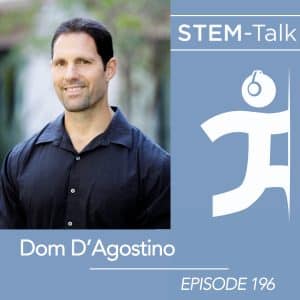 Dr. Dominic D’Agostino, who over the past 10 years has been a frequent guest on STEM-Talk, returns to the podcast to discuss his recent research into ketogenic metabolic therapies, ketone supplements and hyperbaric oxygen therapy for traumatic brain injuries.
Dom is a Senior Visiting Research Scientist at IHMC as well as an Associate Professor in the Department of Molecular Pharmacology and Physiology at the University of South Florida’s Morsani College of Medicine.
In addition to developing and testing metabolic-based therapies, Dom’s lab at South Florida also investigates seizure disorders, brain cancer, neurodegenerative diseases and rare genetic-metabolic disorders.
In episode 196, which is now available on your favorite podcast apps, YouTube and IHMC’s website, STEM-Talk co-hosts Drs. Ken Ford and Dawn Kernagis, have a discussion with Dom about:
— The science of ketogenic metabolic therapy (KMT) as a dietary approach to improve metabolic health.
— His work with the Moffitt Cancer Center focusing on KMT as a way to enhance immune-based therapies for certain types of cancers.
— The potential of KMT to treat high-grade gliomas, or brain cancers, such as glioblastoma, which is the most aggressive primary brain tumor in adults.
— The mitochondrial stem cell connection theory (MSCC), which argues that cancer originates from chronic oxidative phosphorylation insufficiency in stem cells
— The long-term hepatic safety of ketone supplements.
— The effects of ketone supplements on liver function.
— A paper he co-authored that showed a small amount of carbohydrates is sufficient to fuel athletic performance.
— A University of South Florida trial on hyperbaric oxygen therapy as a treatment for traumatic brain injury.
— Emerging applications of hyperbaric/hyperbaric-oxygen therapy in the treatment of different neurological disorders.
STEM-Talk is an award-winning podcast from the Florida Institute for Human and Machine Cognition that hosts conversations with the leading minds in science and technology. Listen on your favorite platform or browse our library at IHMC.us/stemtalks.
IHMC’s new humanoid Alex aces its first off-site, off-tether demonstration
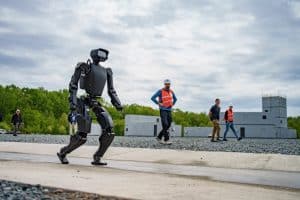
IHMC’s robotics team has just completed an off-site demonstration of its newly developed humanoid robot, Alex.
“Things went really well,” said Senior Research Scientist Robert Griffin. “I believe the Office of Naval Research was impressed by the progress we’ve made over the past 10 months.”
The Office of Naval Research (ONR) awarded IHMC a multi-year and multimillion-dollar contract to develop a robot capable of offsite and outdoor urban operations. The goal for Alex and its successors is to be nimble enough to operate in extreme environments, especially those involving military scenarios and disaster response where the risk for human casualty and injury is extremely high.
“We are designing Alex so it will be able to walk up to a building, open a door, and walk around inside to assess a situation. The first soldier or responder who enters a building or warehouse is at a very high-risk of casualty. With Alex, our robot will be able to enter and assess these hazardous environments where human entry is extremely dangerous,” said Griffin.
Lessons the robotics team gleaned from its work with Nadia have been incorporated into Alex. Nadia is an IHMC humanoid that advanced the robotics field and gained YouTube notoriety for playing ping pong with members of the robotics team. Nadia was a testbed for the structural design of humanoids, from joints to actuators to software that could drive the robot’s behavioral capabilities.
“Alex builds upon years and years of foundational work that our robotics group has been undertaking for more than two decades,” said IHMC CEO Morley Stone. “A confluence of technological advances that have happened on multiple fronts over the past few years have been incorporated into Alex. The combination of these advances have given Alex game-changing capabilities.”
The foundational work Stone refers to began in the mid-2000s when IHMC established its robotics program. It gained notoriety in 2015 when it’s semi-autonomous robot, nicknamed Running Man, brought home $1 million in prize money for placing second in the international DARPA (Defense Advanced Research Projects Agency) Robotics Challenge. That same year IHMC and Running Man appeared on the cover of Time magazine for a story about the epic race to build a humanoid robot.
That was more than 10 years ago, however, and the difference between Running Man and Nadia and now Alex are like night and day, said Stone.
“Even now,” said Stone, “the most advanced competitor humanoids are targeted for the structured environments of warehouses and repetitive tasks that are simple compared to real world environments, especially outdoor environments with changing conditions and the chaos of military operations. So moving robotics out of the lab and into the real world represents a huge step forward for not only IHMC, but all of robotics.”
During the demonstration in Maryland for the Office of Naval Research, Alex successfully walked on rocky gravel, slick surfaces and uneven pavements. “Alex did everything and more that we asked it to do,” said Griffin. “I have to say, even the robotics team was impressed by how well Alex did.”
A Letter From Our CEO
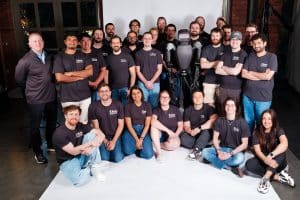 At IHMC, we are all about advancing the human condition and, as such, excited to bring you a more dynamic digital newsletter that will provide the most up-to-date information about the exciting work that goes on here at the institute. With this new format for the newsletter, we will be able to incorporate multimedia to better bring our research to life. For example, you will not only be able to read about our ground-breaking work, but also view videos of our research in action.
In early April at our annual open house, IHMC’s robotics team unveiled Alex, our new advanced humanoid robot designed to step out of the lab and into real-world environments. The open house was the first opportunity for the public to meet and observe Alex.
Just recently, our robotics group took Alex on the road for the first time for a demonstration before the Office of Naval Research, which awarded the institute a multi-year, multi-million-dollar contract to develop the next-generation humanoid robot. Even now, the most advanced humanoids are designed for the structured environments of labs and warehouses where they perform repetitive tasks that are simple compared to the demands of real-world environments and their changing conditions. Alex represents a new era of nimble, adaptive humanoids that builds upon years of foundational work by our robotics team.
In this edition of the newsletter, you also will learn about:
— How our National Center for Collaborate Autonomy hosted its inaugural workshop with participants from across the United States. Back in January of this year, I had the opportunity to talk to different Congressional offices. A topic on everyone’s mind was how the future of all military conflicts, as we’re now seeing in Ukraine, will be dictated by autonomous systems like drones and unmanned vehicles. The NCCA was created to advance research in collaborative autonomy – not only between autonomous agents, but more importantly push the frontiers of human-machine teaming.
— An IHMC project focused on leveraging the power of simulation and virtual reality to fit the mission needs of warfighters out in the field. The project, titled Workbench, is designed to reshape how we test new technology and validate new products before training teams to effectively deploy the new technology in various warfighter situations.
— An update on our clinical trial supported by NIH, which is investigating how a potent personalized exercise program can mitigate age-related functional decline and other hallmarks of aging. As a multi-site trial with partners at the University of Florida and Oklahoma Medical Research Foundation, more than 150 people in the Pensacola area have taken part so far as research participants in the trial, which is investigating the physiological benefits of exercise for an aging population, and understanding the molecular basis for individual differences in response.
— And a roundup of other news happening at IHMC, including events and new hires and a couple of prestigious leadership appointments for two of our research scientists.
I hope you enjoy this revamped newsletter and will help us spread the word about the exciting and game-changing research being conducted at our Pensacola and Ocala campuses. – Morley Stone
IHMC project helps pioneer new tools for warfighters

The Russian-Ukrainian War has evolved over the past four years into the world’s first drone military conflict. Ukraine turned to inexpensive off-the-shelf drones at the beginning of the war to combat Russia’s larger and better-equipped army.
The off-the-shelf drones were so effective at tracking Russian troops and bombing enemy targets that Ukraine quickly created manufacturing assembly lines capable of producing a million drones a year.
With support from the U.S., Ukraine began innovating the use of unmanned aerial vehicles (UAVs) that led to a new generation of sophisticated drones that have rapidly transformed the nature of warfare. These innovations in autonomous systems are now being deployed in Iran.
As a result of the military conflicts in Ukraine and Iran, new technologies in drones and autonomous systems are being rolled out around the world at an unprecedented pace. To help pioneer new capabilities, IHMC launched a project called Workbench four years ago. It allows the US military to prototype new concepts and rapidly develop new tools and technologies for warfighters that could be deployed in the battlefield. Over the last four years, Workbench has expanded far beyond its original mission.
“We’ve grown a lot over the last four years,” says Matt Johnson, an IHMC Senior Research scientist and one of the leaders of Workbench. “We started out prototyping new concepts to meet the needs of warfighters. But then SOCOM (U.S. Special Operations Command) started asking us, ‘Can we use this for training on these new systems? Can we use it for mission planning? Can we use it to do rehearsal? Can we use it for advanced drone training?’ So, over the past four years, we’ve extended Workbench to support each of these capabilities in an integrated manner to allow seamless transition between them.”
The project evolved when SOCOM and its Science and Technology Directorate began looking at ways to provide Special Operations Forces with new technologies that could be used in the battlefield in a variety of different environments. These new technologies were in the areas of artificial intelligence, robotics and autonomous systems, all strengths of IHMC and its scientists.
So when SOCOM began acquiring these new technologies but quickly realized it also need training programs for these new tools, the command once again turned to IHMC.
“We’ve been quite good at meeting SOCOM needs. Even though Workbench originally was designed to prototype new concepts, we’ve continually adapted to developing training programs and rollouts for these new technologies. While many are skeptical of the value of Augmented Reality having never used Workbench, once they try Workbench out, most leave as converted believers in its value.”
So well that IHMC CEO Morley Stone says Workbench is now ready for prime time.
“Workbench is reshaping how you build products. It’s also reshaping how you validate new products and how you train teams to utilize new technologies, and even how you effectively deploy these new products and technologies in varied situations.”
Today IHMC researchers are working directly with Special Operations Forces to shape Workbench in a way that meets the immediate needs of the warfighter.
“By working directly with warfighters,” says Stone, “the Workbench staff is able to test the integration of these new technologies into a warfighter team earlier in the process of product development. The strength of this approach is that it stresses the importance of the operator being embedded within the process in order to fully understand the product and its operations. It is this interaction of people and technology in a real-world environment and within a mission context that will help us identify the critical issues in tomorrow’s sophisticated technologies.”
Johnson adds that IHMC researchers work hard to be responsive to their customers. “So we go and deliver a product to a customer, and we’ll spend time with them. They’ll bring people by, we’ll walk them through the product. We’ll ask them a lot of questions about what they like, what they don’t like, what they would like to see, what they would like to be able to do? And then we take all of that and bake it into the next solution. So, every time we go back to the customer, we are able to make something better. As a result, the progress of Workbench has been excellent. Each year we have more customers interested than the previous one and that’s always a good sign of value.”
In terms of being ready for prime time, Johnson and the Workbench team are now looking at ways to commercialize some of the capabilities that Workbench is providing. “That’s exciting in the sense that Workbench is mature enough now that we can actually potentially put it out in the market in different ways,” he says.
Stay tuned says Stone. “Workbench has created a whole new way of imagining and developing new technologies and products. The project is pretty young, just four years old. It’s exciting for me to think about what Workbench will be like 10 years in another four years.”
STEM-Talk: Doug Cooke talks about strengths and flaws of NASA’s Artemis mission
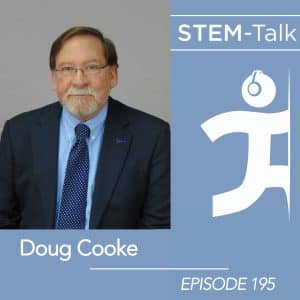 Four days after the astronauts of NASA’s Artemis II mission splashed down in the Pacific, STEM-Talk host Dr. Ken Ford interviewed Doug Cooke, an aerospace consultant who spent 38 years at NASA’s Johnson Space Center in Houston and NASA Headquarters in Washington, D.C.
Ford, IHMC founder and a former Associate Director of NASA’s Center of Excellence in Information Technology, talked to Cooke about the Artemis mission’s 10-day roundtrip from the Earth to the Moon as well as NASA’s plans to return humans to the lunar surface by 2028.
During his 38 years at NASA, Cooke played critical roles in the Space Shuttle, International Space Station and many other spaceflight programs. During the last three years of his NASA career, he served as Associate Administrator of the Exploration Systems Mission Directorate, which oversees the development of systems critical to NASA’s plans for human exploration of the Moon and Mars, including the Artemis program.
Several times in his career, Doug served under Dr. Mike Griffin, our guest on episode 189, who served in a variety of senior leadership roles, including NASA Administrator. Mike and his colleague Dr. Lisa Porter shared their concerns in episode 189 that NASA’s Artemis program is seriously flawed and that the U.S. is at risk of falling behind China in the race to the Moon. In today’s interview, Cooke shares that he, too, believes the Artemis program is flawed.
In episode 195, which is now available on your favorite podcast apps, Cooke also discusses:
— His key takeaways of the Artemis II mission as well as his thoughts about the Artemis program more broadly.
— The success of the Apollo program.
— Issues with the Artemis mission architecture.
— His belief that NASA needs to come up with a plan-B for the Artemis mission architecture.
— The role of private industry (i.e., commercial space) in space exploration.
— The challenges and complexities of sending humans to Mars.
— How China could one day surpass America’s leadership role in human spaceflight.
STEM-Talk is an award-winning podcast from the Florida Institute for Human and Machine Cognition that hosts conversations with the leading minds in science and technology. Listen on your favorite platform or browse our library at https://www.ihmc.us/stemtalks/
IHMC hosts national workshop on collaborative autonomy
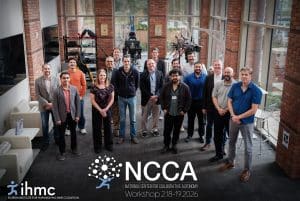 The nature of military conflicts has changed. In the past, drones and unmanned systems had a small impact. But as we are seeing in Iran and Ukraine, unmanned systems are now having a dominant impact.
“It shouldn’t come as a surprise that drones and other unmanned autonomous systems are having a bigger impact than they did 10 years ago,” says IHMC Senior Research Scientist Matt Johnson. “It also should not be a surprise that if you can scale unmanned systems better, you will have a significant advantage in future conflicts.”
The problem in terms of military conflicts is that each drone or unmanned platform is operated by one war fighter, says Niranjan Suri, a Senior Research Scientist and Associate Director at IHMC.
“Right now, there’s typically one war fighter in the field driving one drone. But if you talk to people in Ukraine, they would like to launch 100,000 drones at the same time. The problem is they don’t have 100,000 pilots. This is why we need to get where a war fighter is not commanding a single unmanned autonomous vehicle, but commanding a whole fleet of drones and autonomous systems.”
This in a nutshell is what IHMC’s newly created National Center for Collaborative Autonomy is all about. It’s also what drew 13 people from nine top national universities to Pensacola to talk about beginning a new research community around collaborate autonomy. During the invitation-only workshop, researchers worked on identifying the barriers to scaling the use of autonomous systems in multi-domain operations. They also brainstormed the fundamental capabilities necessary to move beyond these barriers.
“The goal of the workshop was to find common areas of research and also mechanisms by which we could collaborate,” says Niranjan. “It became apparent that all these different organizations that came to the workshop have different strengths and that we can complement each other by working together to address the problems that the military and its autonomous systems are facing.”
IHMC created the National Center for Collaborate Autonomy (NCCA) after receiving a $6.7 million grant from the Triumph Gulf Coast Board. Triumph is a nonprofit corporation funded by a legal settlement with British Petroleum following the Deepwater Horizon oil spill in 2010. IHMC has long been recognized for its expertise in drones and autonomous systems. By leveraging this expertise with the expertise of other organizations in cooperative human-machine teaming, the NCCA has the potential to become a driving force for shaping the future of military conflicts as well as protecting the nation’s security and economic interests.
As Johnson points out, right now we have warfighters out in the field wearing goggles and holding a joystick. “So the problem is that they can only control one drone when ideally they could be able to control something like 20 drones. But because you can’t control 20 drones with one joystick, we need something different. And that in my mind is what the NCCA is about. How do we scale the use of drones and other autonomous systems and the impact that we now seeing them have in Ukraine and Iran? Whoever can scale autonomous systems first is going to have a big leg up on the rest of the world.”
Militaries around the world, according to Suri and Johnson, are focused two things: how to optimize unmanned aerial systems, especially Kamikaze drones, and how to counter these unmanned aerial systems.
“What if instead of having one Kamikaze drone, you have an adversary in the field who now has 50. So how do you come up with mechanisms by which you can counter or prevent an attack by 50 Kamikaze drones?”
This, however, isn’t the only issue militaries are facing.
“It’s not just about the coordination amongst aerial drones, but how do they then collaborate with surface robots that might be out at sea or undersea robots? And this is what we mean by multi-domain collaborative autonomy. And that’s really where we are trying to go. And of course, we have to make sure that the human warfighter is integrated into this overall system so that they can maintain oversight and provide overall direction to what these autonomous platforms are doing.”
Johnson says it became apparent during the workshop that there’s an urgent need to figure out how to scale the use of autonomous systems. “There was so much interest in working on this that everyone was excited in taking next steps. The group we assembled has a lot of resources that offer the potential to do more than we can do by ourself here at IHMC. That’s why we want this to be a national center. We want to tap into a broad range of organizations and their resources. By working together, we will be able to accomplish more than if we were all working by ourselves.”
Next steps for the NCCA group include writing papers and research proposals together. There’s also an opportunity to figure out how to apply autonomous systems beyond military use.
“For example, how do we apply autonomous systems in manufacturing and potentially heath care?” says Johnson. “There are other domains where we’re going to see automation have the same effect that it’s having in the Department of War space. So manufacturing and health care will run into the same challenge the DOW now faces of how to scale these autonomous systems. If the collaborative that we’ve created with the NCCA can get out front on this, it will really open a lot of doors not only for us here at IHMC, but also for all the organizations that showed up for the workshop.”
In addition to IHMC, the universities that attended the workshop include: Arizona State, Georgia Tech, Ohio State, Brigham Young, Penn State, Mississippi, University of Maryland, University of Florida and the University of West Florida.
“It was a great group and I’m excited to see what comes next,” says Johnson.
Community turnout lifts IHMC clinical trial to a great start
 Dr. Marcas Bamman likes to think of exercise as a miracle drug.
“I’ve long believed that we need to leverage exercise as a true form of medicine,” says Bamman, a Senior Research Scientist at IHMC and Director of the Institute’s lab for Healthspan, Resilience and Performance Research. “If we could bottle exercise into a pill, it would be a miracle drug.”
Right now, with Pensacola’s help, Bamman and his colleagues at IHMC are in the midst of a clinical trial designed to demonstrate exercise’s potential to slow down and even reverse the hallmarks of aging. Called Multidimensional Modeling to Maximize Adaptations to Exercise (M³AX), the clinical trial aims to provide evidence of exercise’s ability to improve the healthspan and quality of life of people ages 60 and older.
Over a 30-year career, Bamman has been involved in healthspan studies and clinical trials around the world. He has worked to provide physicians and health-care providers with the evidence they need to leverage exercise as medicine. The M³AX trial that’s underway is a good example and it’s off to a great start thanks to the turnout and interest of Pensacola and the surrounding communities.
“Our clinical trials are typically pretty demanding for the volunteers but the intent is for them to also be highly rewarding. Recruiting volunteers for clinical trials like M³AX is often challenging, but thankfully not in this community. The turnout of people in Pensacola wanting to participate has been phenomenal,” says Bamman, who is the principal investigator of M³AX.
The Oklahoma Medical Research Foundation in Oklahoma City and the University of Florida are collaborating on the clinical trial that’s being funded by the National Institutes of Health. The recruitment goals are to enroll 156 people in Pensacola and 94 people in Oklahoma City. The goal is to run 250 people over 60 years old through the 23-week exercise regimen, which includes three days a week of combined endurance training and weight training.
It’s not just the people of Pensacola who have been great, but also the health-care systems, says Bamman. “Baptist and Ascension Sacred Heart and HCA Florida West have been more than willing to collaborate with us. So if we find something abnormal during a screening exam, we have the partners for referrals. If they have a heart condition or a bone or joint condition, we can send them to somebody. That’s been a great service for the people participating in the trial.”
The study has attracted volunteers from all walks of life and professional backgrounds, says Bamman. “We have physicians, nurses, artists, architects and pilots. We’ve had Navy veterans and Air Force veterans and a number of other people who served in the military. We’ve even had a few husband-and-wife couples sign up.”
The oldest participant so far has been 87. But the most remarkable thing about the community’s turnout is that more than half of the clinical trial’s participants are 70 and older.
“We have a very stringent set of screening criteria,” says Bamman. “When we designed the trial for people 60 and older, we told the NIH a minimum of 30 percent of the participants would be 70 or older, which is an age group more challenging to enroll. That’s because the older you get, the more chance there is that something screens you out. But rather than struggling to get 70+ year-olds, we have had great success thanks to Pensacola.”
Bamman believes there are two main reasons why Pensacola and the surrounding area have shown so much interest in the trial. “First, what we’re doing promotes healthspan and people in this age group are especially interested in taking better care of themselves. That’s the first thing.”
The second thing, says Bamman, is that the clinical trial is the first opportunity for people in Northwest Florida to participate in an NIH funded study like this. “A lot of the participants will come up to me and say, ‘This is unbelievable. I can’t believe we’re doing something like this here, that we have a facility like this in Pensacola.’”
Indeed, the $40 million healthspan, resilience and performance research complex opened two years ago. It was specifically designed to be able to conduct clinical trials and studies like the NIH-funded M³AX trial. Bamman says it has been very encouraging for him to see how the people in the trial see the value of the complex and what IHMC is doing for them and Pensacola.
He tells the story of one participant who had just started the program who asked how much it would cost him if he were having to pay for all the personal trainers who are working with him as well all the diagnostic tests that are being done him.
“It would be really expensive, wouldn’t it?” said the gentleman.
“Well, since you’re a taxpayer,” said Bamman, “you’ve already paid for it. This is government money supporting the trial. We just happened to bring that taxpayer money back here to Pensacola so we could do cool stuff like the study you’re in.”
Two IHMC researchers named to top posts in worldwide organizations
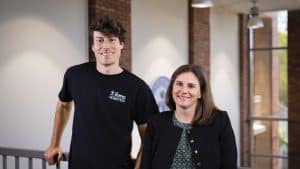 Drs. Nicole Rendos and Luigi Penco, a pair of up and coming research scientists at IHMC, were recently appointed to high-level positions in two of the nation’s most prestigious organizations representing scientists and researchers not only in the U.S., but around the world.
The Southeast Chapter of the American College of Sports Medicine named Rendos its president for 2026 while Penco was appointed co-chair of the Institute of Electrical and Electronics Engineers Robotics and Automation Society’s Technical Committee on Telerobotics.
“Nicole and Luigi have been fantastic additions to IHMC,” said IHMC CEO, Morley Stone. “It’s nice to see the two of them recognized not only by us, but also by two external organizations that represent some of the finest scientists in sports medicine and robotics around the world.”
Rendos joined IHMC last year as a research scientist working with the institute’s Healthspan, Resilience and Performance Research team. In 2025, she served as president-elect of the Southeast Chapter of the American College of Sports Medicine and was the program chair for its 2026 Annual Meeting, which drew more than 1,300 members from 10 states and Puerto Rico. The American College of Sports Medicine is the largest exercise science and sports medicine organization in the world with nearly 50,000 members.
Rendos specializes in biomechanics, motor control, rehabilitation and exercise physiology. Much of her work has focused on using real-time gait biofeedback as an intervention for diabetic neuropathy, and muscle use and activation patterns in runners.
Prior to her arrival at IHMC, Rendos was the director of the Gait, Exercise and Rehabilitation Lab at Emory University. Much of her research since earning a Ph.D. from the University of Miami, has focused on biomechanics and rehabilitation medicine. She is particularly interested in improving functional mobility and the quality of life for people living with chronic disease, primarily diabetes and diabetes-related complications.
At IHMC, she is currently the Principal Investigator of a clinical trial funded by the National Institutes of Health that’s investigating the use of audiovisual biofeedback to improve walking mechanics in individuals with diabetic peripheral neuropathy. In addition to her work at IHMC, she also is faculty member at the Usha Kundu MD College of Health at the University of West Florida.
Penco is a roboticist who arrived at IHMC in 2022 after receiving his Ph.D. in robotics at the National Institute for Artificial Intelligence and Automation in Nancy, France. He specializes in autonomy, teleoperation and human-robot interfaces for humanoid systems. His research and development work center on advancing the seamless integration between human operators and autonomous robots.
At IHMC, he leads and contributes to several high-impact research initiatives supported by the Office of Naval Research (ONR), and the Army Research Laboratory (ARL). He has also served as the Principal Investigator for NASA’s Valkyrie project, which leveraged IHMC’s software framework to enhance the autonomy and usability of NASA’s Valkyrie humanoid robot.
He is now the Co-Principal Investigator on ONR’s Squadbot project, which is focused on developing a robotic platform and autonomy algorithms for building exploration. He also is part of ARL’s Explosive Breaching project, which aims to increase the safety of dismounted infantry by using robots for breaching tasks.
As co-chair of the IEEE Robotics and Automation Society’s Technical Committee on Telerobotics, he will help steer a research agenda in telerobotics for the society. He will be organizing technical sessions as well as workshops and panels in an effort to facilitate collaborations between academia and industry. Penco also serves as an associate editor of the Robotics and Automation Society’s flagship conferences, such as the International Conference on Robotics and Automation as well as the International Conference on Intelligent Robots and Systems.
The IEEE is the world’s largest professional organization representing nearly 500,000 engineers and technologists who work together to foster innovation and global collaboration across various technical fields.
Public learns about robots, drones, virtual reality, Healthspan advances and more at open house

More than 500 people attended IHMC’s open house where the public had its first opportunity to see the robotics team’s new humanoid robot, Alex.
The open house is held annually in conjunction with National Robotics Week, which was established by Congress in 2010 to give students, teachers and the public an opportunity to meet with scientists and engineers to learn about their work in robotics and technology.
“We had a great turnout,” said IHMC COO Cassie Guilliams. “It was so rewarding to see how people, especially children, were fascinated with the work and research that goes on here at IHMC.”
In addition to watching demonstrations of IHMC’s robots, visitors had opportunities to interact with dozens of IHMC scientists and engineers to learn about their research into drones, virtual reality, human performance, exoskeletons, artificial intelligence and other technologies.
Visitors also found out about the new National Center for Collaborative Autonomy, an initiative focused on optimizing the abilities and potential of autonomous systems like unmanned aerial vehicles, self-driving cars and space probes.
STEM-Talk: Tommy Wood shares science-backed strategies to enhance your mental sharpness
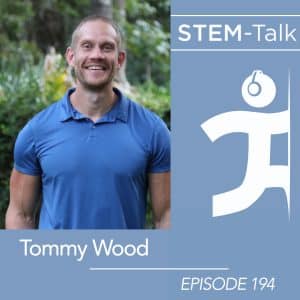 Dr. Tommy Wood rejoins Drs. Ken Ford and Dawn Kernagis for the second of his two-part interview about his just released book, “The Stimulated Mind: Future-Proof Your Brain from Dementia and Stay Sharp at Any Age.”
Tommy is a neuroscientist and associate professor at the University of Washington where he runs a neuroscience lab. He also is a visiting research scientist at IHMC who has been a frequent STEM-Talk guest and occasional co-host.
In today’s part two of his interview, Tommy shares science-backed strategies to enhance mental sharpness and prevent cognitive decline, including Alzheimer’s disease. Dawn and Ken talk to Tommy about how to future-proof our brains and the importance of diet and exercise for brain health. Tommy also emphasizes the importance of stimulating and challenging our brains by learning new things throughout our lifespans. In part one of his interview, episode 193, Tommy discussed the history of neuroscience as well as his mission to dispel the myth that the brain is doomed to decline with age.
In episode 194, Tommy also talks about:
— How what we eat has a direct effect on our long-term health and dementia risk.
— The importance of nutrients and how women on average are lower in B12, iron, iodine, and calcium, while men are typically lower in magnesium, zinc, and various B vitamins.
— His thoughts on red meat and fish consumption.
— The genetic basis for dementia and Alzheimer’s, particularly regarding the APOE genotypes.
— How brain health is tied closely to the extent we stimulate our brains, especially as we age.
— How retirement is a point in someone’s life where their cognitive abilities are most at risk.
— How social media and AI are affecting our brains.
The Stimulated Mind is now available in bookstores as well as Amazon and other booksellers. Be sure to check out part one of Tommy’s interview, episode 193.
IHMC open house unveils the robotics team’s new advanced humanoid Alex
 At this year’s IHMC open house on April 10, the public will have its first opportunity to meet Alex, the institute’s new advanced humanoid robot.
“We are so excited to show off Alex,” said Senior Research Scientist Robert Griffin, who leads HMC’s robotics group. “Alex has been developed to step outside of the lab and perform in real-world environments. It’s a big step for us. The maneuverability, autonomy and search skills of Alex will allow it to serve as a human avatar for first responders in emergency situations.”
Alex is built upon the cutting–edge research that IHMC did with Nadia, a humanoid that entertained last year’s open-house visitors by playing ping pong with members of the robotics staff. Although Alex features next-generation technology and capabilities, it lacks one very important thing: a face.
“At the open house, children are invited to put on their engineer–designer hats and imagine what Alex’s face would look like,” said Robotics Lab Coordinator Claudia Artzer. “The most creative ideas will be chosen, celebrated by the Robotics team, and brought to life as a 3D replica. We’re hoping that children will be able to inspire us come up with creative concepts.”
In addition to being able to watch demonstrations of Alex, visitors will have opportunities to interact with dozens of IHMC scientists and engineers to learn about their research into drones, virtual reality, human performance, exoskeletons, artificial intelligence and other technologies.
Visitors also will be able to learn about the new National Center for Collaborative Autonomy, an initiative focused on optimizing the abilities and potential of autonomous systems like unmanned aerial vehicles, self-driving cars and space probes. Recent events around the world have underscored that autonomous systems like drones are fundamentally changing the nature of military conflicts.
The April 10 open house will be held from 4 to 7 with the last tour beginning at 6:30 at the IHMC campus, 40 South Alcaniz. The event is part of national robotics week, which was established by Congress in 2010 to bring together students, teachers and other interested parties who share a passion for robotics and technology.
STEM-Talk: Tommy Wood discusses his new book and the adaptability of the aging brain
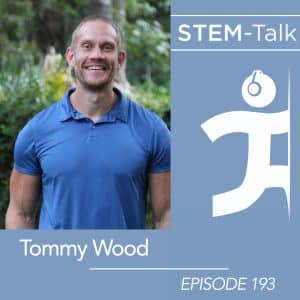 Today Dr. Tommy Wood joins Drs. Ken Ford and Dawn Kernagis to talk about his book, “The Stimulated Mind: Future-Proof Your Brain from Dementia and Stay Sharp at Any Age.”
Tommy is an associate professor at the University of Washington where he runs a neuroscience lab. He also is a visiting research scientist at IHMC who has been a frequent STEM-Talk guest and occasional co-host.
In today’s part one of his two-part interview, we talk to Tommy about his mission to dispel the myth that the brain is doomed to decline with age. “The Stimulated Mind” offers science-backed strategies to enhance mental sharpness and prevent cognitive decline, including Alzheimer’s disease.
In part one of our interview, Tommy discusses:
- How neuroscientists study the brain.
- Dispels the conventional belief that the brain is fixed by the time we reach our twenties and incapable of change.
- Provides examples of the adaptability of the adult brain.
- Talks about Santiago Ramón y Cajal, who is considered the first neuroscientist.
- The importance of cardiovascular health in brain health.
- A history of Alzheimer’s disease.
- What we know about age-related dementia.
In the upcoming part two of Tommy’s interview, Tommy shares ways that people can stimulate neuroplasticity in the adult brain.
STEM-Talk is an award-winning podcast from the Florida Institute for Human and Machine Cognition that hosts conversations with the leading minds in science and technology. Listen on your favorite platform or browse our library at https://www.ihmc.us/stemtalks/