

Investigating stress-induced mitochondrial dysfunction and its role in systemic health
Metabolic stress is a common occurrence for active-duty military service members. It occurs during periods of sustained physiologic challenges such as continuous physical activity, thermal stress, severe caloric deficits and sleep deprivation, which warfighters routinely experience. These stressors, both on their own and in combination, eventually lead to metabolic dysfunction, which can degrade a warfighter’s operational performance.
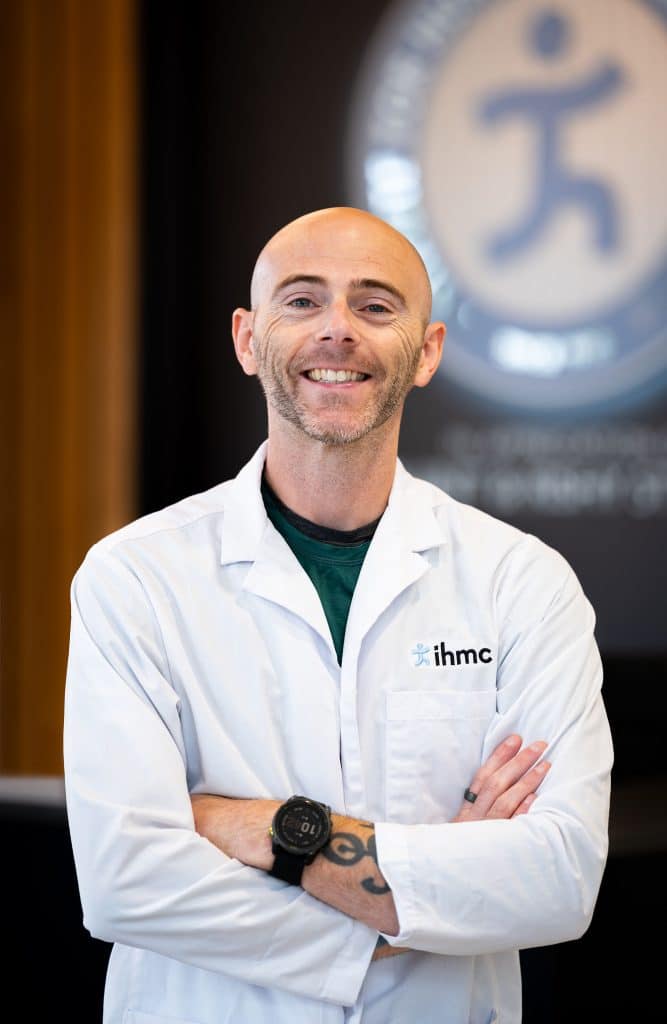
HMC Research Scientist Zachary Graham has a new three-year Air Force Office of Scientific Research grant to gain a better understanding of stress-induced mitochondrial dysfunction. Mitochondria are specialized, double-membrane structures within cells that serve as the primary source of energy production. They are often referred to as the powerhouses of the cell.
In addition to regulating energy metabolism, mitochondria also regulate controlled cell death, called apoptosis. They also can drive a cellular pro-inflammatory environment when normal function is compromised. Dysfunctional mitochondria create excessive reactive oxygen and nitrogen species (ROS/RNS) that can damage proteins, lipids and DNA/RNA; these changes also activate inflammation. Gaining a better understanding of mitochondria and their role in stress-induced mitochondrial dysfunction can provide critical insights into the sources of cellular energy as well as breakdowns of cellular energy.
Graham, who has been at IHMC for the past five years, primarily researches how exercise can be implemented to improve the health and quality of life of people across disease states and lifespan. His projects focus on in-depth phenotyping, including cognitive and physical performance, fresh tissue and in vitro mitochondrial function, and high-resolution integrative molecular multiomics profiling.
Below is a conversation with Graham about his research and his three-year grant to study the role of stress-induced mitochondrial dysfunction on the subcellular metabolome.
Much of your research over the years has focused on mitochondria, which are membrane-bound organelles that are often referred to as the powerhouses of the cell because they produce the energy that’s critical for cellular functions. What led you to first start researching mitochondrial dysfunction?
I first started about 12 to 13 years ago during my postdoc. I was really interested in first, how to protect skeletal muscle mass after paralysis, which we induced using a spinal cord injury in mice. There are pharmaceuticals that exist that target key molecules that reduce muscle loss and we tested a bunch of them with little success in animals. Spinal cord injury is not a static injury and a lot of people recover some function in early weeks during recovery as the swelling around the spinal cord reduces. I was interested in finding a way to slow the loss of muscle during this recovery period as we thought this would allow someone to have more muscle when they start recovery, which we believed would help a person recover faster.
I then started to become interested in mitochondrial function, which makes up a lot of our muscle. If we couldn’t preserve muscle mass, maybe at least we could preserve muscle metabolic function. Some 5-15 percent of our muscle cells are mitochondria, depending on the fiber type and there are drugs that exist that are close to market or at market that you can use to target mitochondria and importantly, you can inject into a human. My general thought is that you’re only as healthy as your muscle, and your muscle is only as healthy as your muscle mitochondria. That’s kind of how I think about it.
In the abstract for this three-year grant you’re working on, you write that the study is designed to better understand the role of stressed- induced mitochondrial dysfunction. What is the question you’re attempting to answer with this study?
We have what we refer to as transient stress, which is a good thing. Exercise is the best example of this. A transient stress that demands everything from your body provides a molecular and cellular response to build a reserve against that stress in the future. So, if you’ve never exercised and you start to exercise for a while, you get sore. But after exercising for a little while, you’re not sore. That’s in response to that stress. It’s also why if you don’t exercise for a bit, you’re slower or weaker; your body recognizes you no longer need that reserve and gets rid of it.
But then take somebody who goes through sustained, chronic stress with little to no rest. For example, you take a high-level warfighter on a three-week operation who is carrying
a 60-pound ruck for 10 hours in a hot, mountainous region, not sleeping and not eating and is psychologically stressed. Stress is cumulative. Even as single-factor stresses, all of those things reduce the body’s ability to perform normally. But because stress is cumulative, all of these factors add on to each other.
So, taking exercise again as an example, you take three years of exercising correctly to train for the Olympics. Your goal is to peak at a specific date and do better than you’ve ever done. Leading up to the competition you train a little bit more than normal. Then you get anxious so you’re sleeping and eating less and you’re not giving your body a chance to rest and recover. If you continue on this path, your performance will be worse. That’s a simplified version and in the exercise world that’s what we refer to as overtraining but can easily be translated to any activity or profession that stresses the body.
Overtraining, or overuse, isn’t unique to warfighters and other active-duty service members. Elite athletes also experience periods of sustained physiologic challenges that lead to overtraining and overuse.
Yes, military operators and various types of athletes, both recreational and competitive, are always stressed. And in terms of systemic function, this stress affects the entire body, not just one part of the body, like the lungs. And even though military operators and athletes are elite for a reason, nobody is impenetrable to overuse or overtraining.
Take an elite cyclist. They are in better shape than 99.99 percent of people even on a bad day. But if they’re racing the Tour de France and they overtrain too long without giving their body time to rest and recover, their performance compared to their peers in the race is going to be worse. Military operators, however, face a different scenario. They may not be in a situation that is voluntary and orders may place them in rugged terrain in bad weather where they have a ruck and have to hike up a mountain while carrying their weapons and all of their food while being shot at. Their training allows them to manage all these stresses for a day or two and maintain high levels of performance. Some people can handle it longer than others, but everybody has a breaking point and the cure is rest and recovery.
So how is the study being designed?
It’s all in vitro, so it’s all cells – no human participants. The benefit of in vitro study is that you don’t need institutional approval to protect your participants or your mice. You just buy the cells and you get them up and going. This helps with scientific rigor and repeatability because other people can buy the same exact cells and replicate what you’re doing and what you have found. Then you just start cranking through a bunch of experiments.
What are you hoping to find?
What I’m interested in is how the cells themselves communicate stress. Our cells release what are called extracellular vesicles (EVs), which are small membrane-bound particles released by cells and play crucial roles in intercellular communication by carrying proteins, nucleic acids, and other biomolecules between cells. I believe almost all cells can
secrete EVs and it’s a way for our cells to talk through our bodies and system. Within the framework of the grant, we’re going to look at how these cells respond to stress. For a few examples, we will see the timecourse of stress and how fast our cells start to change the EV cargo. We think mitochondrial stress is a major regulator of this and the cells will actually package damaged mitochondria into these EVs. We will also collect the EVs from stressed cells and then put them in healthy cells and see how the healthy cells react. By using cell culture models, we can test all of this in a rigorous way where we don’t have to inject unknown things into a human, but also provide early translational directions where we may identify something we could target with a drug.
IHMC studies the potential of exoskeletons to reduce the biomechanical injuries shipyard workers face
When Jared Li started to study shipyard workers, he didn’t know much the work they did on a daily basis, except that the work was heavily manual and required working through tight and hazardous spaces. He also noticed that much of the work involved bending, lifting, and holding tools for extended periods of time (welding, drilling, grinding, etc.), especially with arms outstretched.
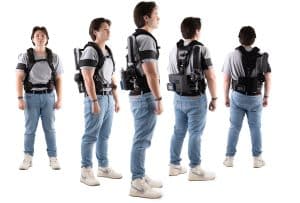
Li, who leads the exoskeleton research at IHMC, wondered if exoskeletons might be a good fit for shipyard workers. Li’s work is focused on finding real-world applications for the technology.
“It became clear to me that the shipbuilding industry was heavily affected by overuse injuries,” said Li. “I started thinking that perhaps the work we do with exoskeletons here at IHMC might be able to ease some of the biomechanical issues the workers face. Just imagine someone who is holding up their arms and welding long periods of time. That puts a lot of strain on the shoulders and the back – so a shoulder-focused exoskeleton could probably help offload that strain on the shoulder muscles. At least, that was my thinking.”
So, Li reached out to Austal USA, a subsidiary of the Australian-based shipbuilding company Austal that designs and constructs commercial ships as well as vessels for the U.S. Navy. One of the company’s three major ship-building facilities is located an hour away from IHMC in Mobile. A month after his phone call to the offices in Mobile, Erik Bjorkner, Senior Manager Systems Engineering and Technology for Austal USA, returned Li’s call.
Since then, the two have formed a partnership in trying to find ways of applying exoskeletons and other robotic technologies to the shipbuilding profession. Together, and support from Garry Shields, Director of the Disruptive Technologies Lab at the Naval Surface Warfare Center Carderock Division, the team submitted a proposal to the National Shipbuilding Research Program (NSRP) and were awarded a grant to study the underlying biomechanics of shipbuilding tasks and how exoskeletons might be able to alleviate some of the biomechanical strain that workers have to endure.
The NSRP is a collaborative effort of the U.S. shipbuilding industry and the U.S. Navy to research, develop and implement shipbuilding technologies to enhance the capabilities of commercial ships and U.S. Naval vessels. Over the next several months, Li and other IHMC staff members will conduct a study to understand the biomechanical effects of shipbuilding and how off-the-shelf exoskeletons assist the work. They will also travel regularly to Austal in Mobile to embed with their workforce to directly understand the challenges the workers face. Then Li and his team will start outfitting Austal workers with the exoskeletons to test.
“Our goal is to see if the workforce can accept these devices and whether the workers perceive any benefit from using them.,” said Li. “In the beginning, we’re going to study a shoulder exoskeleton and a back device. We’re also in the process of purchasing a hybrid back-shoulder device to see if there is a catchall solution that can help with most of the tasks that are done in shipyards. While these devices are likely be successful, I suspect we will find some gaps in effectiveness between each device. At that point, we will start developing our own wearable that can fill these gaps and be more applicable and helpful as well as custom-tailored to the work that is done in shipyards. I believe we’ll be able to reduce injury risk as well as workers’ comp. expenditures in the future”
Li sees exoskeletons as having the potential to reduce the amount of general strain shipyard workers experience during the day. One of the biggest problems the shipbuilding industry faces is rework. Many of the mistakes made during welding and other tasks in the manufacturing phase of shipbuilding can be attributed to fatigue. As Li points out, when a person’s body fatigues from heavy manual work during an eight-hour shift, their ability to focus and do tasks well degrades and leads to mistakes.
“The main thing I’m interested in is trying to help people who need it. A shipyard worker should not get home at the end of the day and feel like they’re completely drained. It’s really unfortunate that millions of people get done with their jobs and have no energy for recreational hobbies or their families. I really believe the work we do with exoskeletons here at IHMC can help with that.”
A Q&A With IHMC’s new CEO, Dr. Timothy Broderick
In October, when Dr. Timothy Broderick took over as IHMC’s new CEO, he became just the third person to hold the CEO title since IHMC’s founding in 1990.
Broderick took over for Dr. Morley Stone, who stepped away as CEO to lead an Air Force spin-out company he helped found, Mined XAI. Stone replaced Dr. Ken Ford, IHMC’s founder wh
o spent 34 years as the institute’s leader and CEO before transitioning into an emeritus role.
Broderick is hardly new to IHMC. He joined the institute eight years ago as Chief Science Officer and Senior Research Scientist, to shape research strategy and lead high-impact research
focused on enhancing human health and performance in extreme environments.
His path to IHMC- and now to its top leadership position- has not been a straight line.
A practicing academic surgeon by training, Broderick has spent much of his career working at the convergence of medicine, science and emerging technologies. Before joining IHMC, he served as a program manager at the Defense Advanced Research Projects Agency (DARPA), where he conceived and established biotechnology programs focused on the diagnosis and treatment of military-relevant disease and injury. Earlier, he served as program manager at the U.S. Army Medical Research and Materiel Command’s Telemedicine and Advanced Technology Research Center.
Throughout his career, Broderick has worked across fields – surgery, computer science, simulation, robotics, and human performance. His research has taken him ab
oard NASA’s KC-135 parabolic laboratory and beneath the ocean as part of NASA’s Extreme Environment Mission Operations (NEEMO) program, where he helped develop advanced surgical technologies for long-duration spaceflight.
That willingness to cross traditional boundaries — and to explore what becomes possible when different disciplines and technologies converge — is a natural fit for IHMC.
Below, Dr. Broderick talks about what drew him to the institute, what he has learned along the way and where he sees IHMC going next.
What most excites you about becoming CEO of IHMC?
I’ve spent much of my career at the convergence of disciplines and forefront of technologies. I’ve often been a square peg in a round hole, and that has served me well. It has taught me to look across disciplines and recognize possibilities that may not be obvious when you stay within the boundaries of just one. This makes IHMC a natural fit for me.
We have tremendous strength in AI and robotics, and now we’re building significant capabilities in healthspan, resilience and performance. What is especially exciting is what happens when these areas converge. There are very few research institutions with the breadth, people and culture to research effectively at these particular intersections.
IHMC has an extraordinary 36-year history, and I feel a tremendous responsibility to build on that foundation. But I’m equally excited about what comes next — expanding our collaborations, pursuing new areas of applied research and making sure the work we do continues to be distinctive, relevant and impactful.
You arrived at IHMC eight years ago as the Chief Science Officer. What drew you to the institute?
While I took a somewhat circuitous path to get here, there has been a consistent thread throughout my career. I’ve always been interested in the places where established disciplines meet and teaming enables something new to become possible.
When I began combining computer science with medicine, things like telemedicine were far from mainstream. Later, my work took me into surgical robotics and telesurgery
– and then evolved into biotechnology and human performance. I’ve been comfortable moving into different areas and bringing ideas from one into another.
That is very much part of the culture at IHMC. Researchers here have the freedom to ask interesting questions and pursue ideas that don’t fit neatly within the boundaries of a single discipline.
When I came here, IHMC was already doing exceptional work in areas like human-centered AI and robotics. I saw an opportunity to bring my own experience to bear and work with IHMC researchers to advance the human condition.
What is the message you want to send about what people can expect from you as CEO?
First, I understand the responsibility that comes with leading an institution like IHMC. We have a remarkable history, a strong culture and longstanding support from the people of Pensacola and state of Florida. Preserving those strengths is important.
At the same time, IHMC is pivoting to respond to changes in federal research priorities, and we are seeing success in attracting funding for applied research in areas such as AI, robotics, and aging.
Though I have been with IHMC for 8 years, as CEO, it is important to connect the dots from our past to our future. With that in mind, I plan to spend time listening, visiting teams, and working toward a well-defined shared vision. One that enables us to anticipate where science, technology and research needs are moving rather than simply responding to where they are today.
That means continuing to differentiate what we do. We don’t want to do the same robotics, AI or human performance research everyone else is doing. We want to identify hard problems where IHMC’s particular combination of people, expertise and capabilities allow us to make distinctive contributions.
That also means making sure IHMC remains a robust and resilient organization – ensuring that our researchers have the environment and resources they need to do exceptional work.
Over the years, IHMC has mostly worked with federal agencies like DARPA, the Office of Naval Research and the Air Force Research Laboratory. Lately, however, IHMC has been branching out to do more commercial work. Isn’t this a shift for IHMC?
We are doing more work with industry, and these partnerships are very important. IHMC excels at developing tech, but traditionally we have not been an organization that has focused on commercialization. But it’s increasingly important for us to commercialize our tech so that it has the broadest possible impact. And, yes, this has been a shift for us.
Another shift is the institute’s expansion into the biological sciences with its new human Healthspan, Resilience and Performance complex. This line of research seems quite promising.
This is another new area for us and it’s very exciting. When you look at our core areas of research – AI and robotics — we continue to be strong. Now we’ve added human performance and healthspan research into the mix — we have become even stronger and more recognized as a leading research institute. The HRP team recently has had some big wins. For example, we have large NIH trials to demonstrate the ability of exercise to improve the healthspan and quality of life of people over 60 years old. With our aging population, this is truly important and timely work. I really like that we are doing research to improve the quality of life of people not only in Pensacola, but across Florida and the United States. To help people live not only longer but fuller lives is at the core of IHMC.
I understand you were out in Silicon Valley recently talking with a leader of a new robotics company. Someone asked you, “How do you do it at IHMC? What’s the key to your success?” So what did you say?
I told him it’s our people. IHMC is indeed a unique place because of the quality of our people as well as the unique structure of how we collaborate. One of the things I learned early on in the operating room as a surgeon is that success is all about the team. As CEO, one of my most important responsibilities will be to broaden our bench and extend our collaborations with other research centers, businesses and universities. I’m fortunate because we have an incredible group of researchers at the institute who have done amazing work over years and decades. We are poised and ready to branch into new areas of applied research and take advantage of new opportunities. It is an exciting time to be at IHMC and I am really looking forward to working with our employees, the Board, and the Pensacola community to shape our mission and future.
Centering the Human in AI Decision Making
 IHMC, in collaboration with Carnegie Mellon University, has developed a new AI, but it’s not a Large Language Model; it doesn’t need a data center; and you can’t talk to it.
Yet.
In the DARPA-funded project MIMIR (Metacognitive Intelligence Maneuvers for Influence and Resolution), Dr. Ian Perera, with co-Principal Investigators Dr. Matt Johnson and Dr. Mark Orr, leads a team of researchers in building an AI system that rapidly learns to make decisions and, perhaps more importantly, learns how we as humans make them. Leaving data-hungry methods behind, MIMIR advances the IHMC mission of centering the human in the AI decision-making process, while paving the way to systems that learn to explore the world without very much input from us at all.
If you want to find an answer to a question, solve a common problem, reorganize a document, or write a program, you probably will still use a Large Language Model, or LLM. But the MIMIR team is targeting different kinds of problems – those where the data is sparse, complex, and the best strategy is dynamic and responsive to changing environments or conditions. Think cybersecurity, disaster response, negotiations – domains where human expertise is immensely valued but difficult to write down as a simple procedure.
The key is that human element. “I’m actually less interested in making better AI than I am in making humans better through AI,” Dr. Perera explains. “While LLMs are trained to produce acceptable answers to the average person, I wanted to explore how we could leverage human strengths, while making our limitations and biases something to improve, not ignore or reinforce.”
In some ways, MIMIR can be seen as a pushback against the ways LLMs seem to be making us say more while thinking less, reinforcing preconceptions and biases, all while sitting behind a black box that not even their engineers can understand. “When you are looking at a MIMIR decision, you can drill down into every piece that went into that decision – it retrieved this example from a similar situation in its memory; it made this inference of missing data based on a particular reasoning method; it assumed this type of behavior or goal based on context; and it used this model of decision bias when making a prediction.”
To achieve this alignment with human decision-making, MIMIR builds on decades of work in cognitive modeling by team members Dr. Christian Lebiere, Dr. Drew Cranford, Dr. Mark Orr, Dr. Brent Venable, and Connor Tate. MIMIR isn’t trained like LLMs and prior data-heavy approaches in AI, but instead, learns more like a human – trying options, seeing what works, and storing its experiences in memory that it can retrieve when a similar past situation might provide valuable insight into the problem at hand. “Our cognitive modeling approaches have a quantifiable advantage in data efficiency,” Dr. Lebiere explains, “but beyond that, we also have an opportunity to model human decision-making biases and then account for, defend against, or leverage that knowledge.”
Human trials have shown that these models predict known human cognitive biases including recency bias, risk aversion, and confirmation bias. By modeling these behaviors, MIMIR can span the gap of decision-making from optimal to human-like.
“In the cybersecurity domain, you often have limited resources to defend important assets,” explains Dr. Cranford. “If you assume every attacker is behaving optimally, you could quickly become overwhelmed. But if you know how those attackers value objectives and risk, you can find ways to make some assets seem like a less attractive target, while strongly defending the others.”
MIMIR rapidly learns to build archetypes of decision-makers – best guesses of their behavior, motivations, and biases. These initial hypotheses provide a first pass allowing the system to make a split-second decision. It may be wrong, but with the cognitive modeling approach, it’s more likely to be wrong in the way a human might be – a key element of building trust when using AI in critical applications like medicine or defense.
“We’ve found that if your AI is going to make mistakes, it’s much better for its mistakes to resemble those of a human,” Dr. Perera explains. “When the AI is open about its weaknesses rather than giving a potentially hallucinated but confident response, a human can make better use of the AI and we actually get better results than when using even a more performant AI.”
Individualized knowledge of human behavior has impacts outside of the adversarial case. If you’ve ever been sent a report or news article written by AI, you’ve probably felt like you’ve just been made to waste your time reading through text when the real meat of the question was buried in a reference. The LLM doesn’t know what you find important, or what questions you would want to ask. That’s where one component of MIMIR, Multialternative Decision Field Theory (MDFT), comes in.
“With MDFT, we can analyze not only the decisions you make, but also where you’re looking at, or where your mouse lingers, and figure out what is important to you even before you say anything,” Connor Tate explains.
MDFT learns a model of preferences and attention, and with that, can predict your next actions or identify when you are deviating from its prediction. “We aren’t just using it to predict actions, but also when physiological or psychological stressors are changing how you are processing information in real-time,” adds Tate.
A key part of MIMIR’s ability to rapidly adapt to new situations centers around work by Dr. Matthew Johnson and Michael Vignati on Joint Activity Graphs (JAGs). JAGs represent actions and activities, but more importantly, how those activities are interdependent. In the domains where MIMIR operates, these linkages are vitally important for guiding the system towards having a coherent strategy. Dr. Johnson has successfully implemented JAGs in other situations like search-and-rescue and firefighting before they were used in MIMIR.
“In real-world, complex decision-making, you have different procedures and processes that interact, and you often don’t see the desired outcome, metric, or reward until the very end of a long effort. JAGs allow the cognitive model to explore a strategic space that obeys the constraints between activities while having a vision towards the long-term goals it wants to achieve.”
The close integration with human knowledge elements, like those encoded in JAGs, is both a strength and a weakness of MIMIR. Dr. Perera explains, “You aren’t going to download MIMIR or access it from a website, because that encoding of domain-specific knowledge takes some time and expertise. But to have that expertise explicitly present and verifiable in the system is, I think, a real strength.”
Even with these caveats, there is a future where MIMIR is engaged with a broader range of problem solving and insight generation, not just working of specific applications behind the scenes. Dr. Perera already has ideas for extending MIMIR to act like a scientist or program manager, finding promising research avenues and gaps in existing knowledge.
“If you think about the frontier of scientific or mathematical research, you have this relatively understudied combination of known processes mixed in with conceptual leaps like analogical reasoning or perspective shifting. MIMIR is positioned to be able to take in that kind of flexible decision-making and exploratory activity to do the sustained work that a standard LLM just can’t.”
This is not to say that LLMs can’t make MIMIR more extensible and perhaps broadly available. On the contrary, Dr, Perera explains that the representations MIMIR uses make it an ideal testbed for integrating with LLMs to explore new domains. “I can envision a system where an LLM acts as a means to operationalize knowledge, whereas MIMIR acts as the prefrontal cortex to actually make the decisions. Because LLMs are trained on large amounts of data, they often have a bias toward what’s already been done or what the user thinks should be done. MIMIR gives us an opportunity to look toward the future and the unknown.”
Distribution Statement “A” (Approved for Public Release, Distribution Unlimited). DISTAR Case 43101. This material is based upon work supported by the Defense Advanced Research Projects Agency (DARPA). The views, opinions, and/or findings expressed are those of the authors and should not be interpreted as representing the official views or policies of DARPA or the U.S. Government.
Investigating exercise’s potential to reverse hallmarks of aging
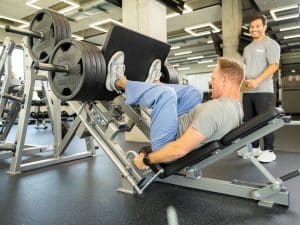 What if you could reduce risk of mortality from any cause by 13, 26, or 39 percent?
Researchers at IHMC think it’s not only possible, but well within reach of people in their sixties who are willing to invest in three days a week of combined endurance exercise training and resistance training.
As people age and reach their sixties, their risk of all-cause mortality spikes. Seniors are more susceptible to deaths from heart disease, strokes, cancer, dementia, and traffic accidents. Plus, as people age and allow themselves to become frail, they are more susceptible to accidental falls, which are the leading cause of injury-related death among people 65 and older, according to the Centers for Disease Control and Prevention.
Dr. Marcas Bamman and his colleagues at IHMC are in the midst of a NIH-sponsored clinical trial that’s designed to demonstrate exercise’s potential to slow down and even reverse the hallmarks of aging that contribute to all-cause mortality. Called Multidimensional Modeling to Maximize Adaptations to Exercise (M³AX), the clinical trial is in the third year of a five-year study that aims to provide evidence of exercise’s ability to improve the healthspan and quality of life of people over 59 years old.
But what if adding a nitrate supplement to an older adult’s endurance and resistance training could help further reduce the risk of all-cause mortality as well as reverse the hallmarks of aging?
That’s the question IHMC is now investigating in a new NIH study that will be a randomized, double-blind placebo-controlled trial called BOOST-X.
Bamman, who is a Senior Research Scientist at IHMC and Director of Healthspan, Resilience and Performance Research, says that BOOST-X is also an exercise trial like M³AX, but with the addition of what Bamman refers to as an adjuvant, which is why the trial is called BOOST-X.
“We are adding a nitrate supplement as a boosting agent to help people who are kind of slow out of the gate to adapt to exercise in a way that will improve their vascular and cardiorespiratory function. Older adults sometimes synthesize lower levels of nitric oxide, which is important for dilating blood vessels. Older adults who have stiff arteries experience a lot of age-related changes that result in reduced blood flow to different parts of the body. If you can impact the ability for blood vessels to relax and dilate, you can deliver more blood to the muscles, to the brain, and all other the body parts.”
Bamman says to think of it as a garden hose. “Compared to a half-inch garden hose, a larger three-quarter-inch garden hose increases flow rate. So providing something that helps blood vessels dilate enables more blood to flow throughout the body while also helping regulate blood pressure.”
As principal investigator of the trial, Bamman and IHMC have partnered with two other campuses, the University of Colorado in Boulder and the University of Maryland College of Medicine in Baltimore. By conducting the study across three sites in different parts of the country, researchers will be able to demonstrate that the clinical trial results aren’t just unique to Pensacola.
“When you conduct a multi-site trial like this, you have a much higher impact on clinical care and on science. In single-site studies, people will look at the results and say, ‘Oh, that’s kind of a cool result on people in Pensacola.’ But if you have a result that repeats itself in other regions of the country, the potential for impact on healthcare is much greater.”
This study aligns with the driving premise behind the focus of Bamman’s research over the years, which is that that exercise is a potent form of medicine. Over a 30-year career, Bamman has been involved in studies and clinical trials around the world that have demonstrated the ability of exercise to improve human healthspan.
If you’re providing something that helps the vascular system improve its ability to deliver blood and nutrients and clear out waste products, it’s not just improving your skeletal muscles, but also the heart, the liver, the brain, the kidneys. It’s improving all your organs. And improving a person’s cardiorespiratory fitness through exercise is the most potent way to do this,” says Bamman.
“So with this study, we want to see improvements across the board, including cognitive function,” he adds. “And by adding the nitrate adjuvant, which has already been shown to improve cognitive function in older people but has never been tested in conjunction with high-intensity exercise, we suspect we will see an even bigger boost in people’s cognitive function.”
Two of the most popular ways to dilate blood vessels and encourage more blood to flow through the body are with a capsule or a drink with a nitrate supplement. Beets, says Bamman, have a high concentration of nitrate. In the BOOST trial, researchers will be using a beet-root juice.
“We are partnering with a company in the United Kingdom that produces the nitrate-rich beet root juice as well as a matched placebo,” says Bamman. “So this trial is double-blind and placebo controlled. Half of the study participants are going to be on the nitrate supplement and half are going to be on a placebo that tastes and looks the same. Nobody will know if they are taking the actual nitrate supplement or the placebo.”
Bamman believes the addition of the nitrate supplement will help enhance some of the healthspan adaptations people experience as a result of exercise. In addition to enhancing blood flow, he believes the combination of exercise and the adjuvant will improve mitochondrial function, reduce inflammation and lower oxidative stress. “These are important additional health benefits if they prove to be true.”
In the M³AX trial, which is in year three, Bamman and his colleagues are seeing clinically important and significant improvements in cardiorespiratory fitness and functional muscle quality in most of the study participants, but not in all of the participants. By adding the adjuvant supplement in the BOOST-X trial, researchers think even more study participants will experience significant improvements in these and other important health outcomes.
“It’s really all about the aging cardiovascular system,” says Bamman. “As our tissues become older, we reduce the number of small vessels, which are called arterioles and capillaries, which feed the different tissues in our bodies. So if you think of a tree, it has a bunch of branches on it. But as the tree grows older, some of those branches fall off. It’s the same thing in our bodies. As we get older, some of the branches of the vascular tree fall off and restrict blood flow.”
Because cardiorespiratory fitness is one of the most powerful and potent predictors of all-cause mortality, the body needs strong blood vessels and a high VO2 max. VO2 max is the maximum rate of oxygen consumption a person’s body can achieve during intense exercise. It is closely related to the efficiency of blood vessels in transporting oxygen to muscles. Improved blood vessel function enhances oxygen delivery, which can lead to a higher VO2 max and better overall fitness.
“If you have a low VO2 max, you’re in trouble. If you have a high VO2 max or you’re improving your VO2 max, the impact on reducing risks of cardiovascular disease and all-cause mortality is actually pretty amazing,” says Bamman, “Even a small increment of improvement in your VO2 max, which we call a MET, is significant.”
MET stands for metabolic equivalent, and one MET approximates a person’s resting metabolic rate. The ability to achieve higher MET levels during exercise indicates better fitness and lower risk of cardiovascular problems. Just one MET of improvement in your VO2 max lowers risk of all-cause mortality 13 percent.
“In the M³AX trial, we are seeing some of the study participants improve their VO2 max by two METS. So that means a 26 percent reduction in risk of all-cause mortality. That’s a big impact,” says Bamman.
For people who are not in the science or biomedical field, Bamman thinks the analogy of a tree and its branches makes sense. “You have an old tree and the branches start falling off. Which branches fall off? Some of the big ones, but mostly the small ones. Think of all those as blood vessels. Let’s restore the tree and actually encourage the tree to grow and branch more. That’s the idea.”
To learn more about the M3AX trial and to consider participating, recruitment is ongoing with more information click on the link below:
Recruitment for participation in the BOOST-X trial is expected to begin in late December 2026. Check the IHMC Study Participation website for future updates: https://www.ihmc.us/study-participation/
Alex wins Army’s xTechHumanoid competition
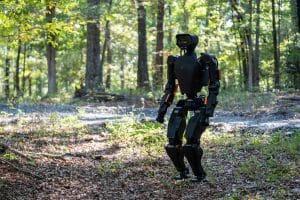 IHMC and its humanoid robot Alex won the demonstration stage of the U.S. Army’s xTechHumanoid competition that was held at the Marine Corps Base Quantico in Virginia.
More than a hundred companies and institutes submitted proposals for the opportunity to demonstrate their humanoid technology to the U.S. military. Based on the papers that were submitted, the Army selected 10 organizations to travel to Quantico to demonstrate the capabilities of their humanoid robots.
IHMC’s Alex stood out for its hybrid autonomy, which combines AI decision-making with human-operator control to perform complex missions. IHMC and four other organizations now advance to a structured evaluation phase where they will further demonstrate how their technologies can operate in complex environments that would otherwise put humans at risk. The final phase also includes an opportunity to secure a prototype evaluation contract with the U.S. Army.
“It was great that out of more than 100 submissions we were selected as one of the top 10,” said Robert Griffin, a Senior Research Scientist who leads IHMC’s robotics group. “And, of course, we are all thrilled that we won the finals of the competition. Now we move on to an evaluation stage where we get to show how Alex is being designed to overcome significant obstacles and operate in environments where there will be high degrees of uncertainty.”
The Army structured the xTechHumanoid competition as a way for the military to gain a better understanding of what humanoid technology can currently do and, thus far, can’t do. The military’s overall goal is to eventually use humanoids to perform physically demanding tasks and reduce soldiers’ exposure to life-threatening situations.
Griffin emphasizes that the goals of IHMC’s robotics team is not to develop autonomous weapons, but to create systems capable of performing dangerous tasks while keeping humans out of harm’s way. “We are not designing Alex to make active combat decisions or to do things like exercising force. We are designing Alex to be able to move from cover to cover between buildings and withstand enemy fire so a soldier won’t have to. For example, if a humanoid needs to find something like an IED in a building, the humanoid will need to be able to get into that building and move around in a building it has never been in before. It may have to get into that building through a door or a window or breach the door with a kick. It may have to move furniture out of the way to search for the IED. We are designing Alex to do all this and reduce a soldier’s exposure to danger.”
IHMC’s win at the xTechHumanoid competition comes on the heels of a successful demonstration Alex made earlier this year for the Office of Naval Research (ONR). The demonstration featured an untethered Alex walking over gravel and along slippery and uneven surfaces. The design and development of Alex is a multi-year, multimillion dollar project that’s being funded through the ONR.
“Alex’s abilities have come a long way in the past year,” said Griffin. “But there is still so much more that we need to work on. The good thing about the xTechHumanoid competition and our demonstration for ONR is that they showed us we are on the right track.”
STEM-Talk: Is AI out of control? Could it kill humanity? Ken Ford discusses the real and imagined risks of AI
Could AI kill all humanity? Will AI someday have consciousness similar to humans? How worried should we be about rogue AI agents?
For STEM-Talk’s milestone 200th episode, Dr. Ken Ford sits down with Dr. Dawn Kernagis to answer these listener questions and more about the risks and advances of AI. After we posted episode 198, an Ask Me Anything episode where Ken answered listener questions about chatbots and data centers and the future of AI, we received a new wave of listener questions about AI that Ken addresses in episode 200.
Ken has been working in AI since the 1980s and is well-positioned to address listener questions. The Association for the Advancement of Artificial Intelligence elected Ford a Fellow in 2000 for his “leadership in exploring and explaining foundational issues and in establishing large-scale AI research programs and institutions.” In today’s episode, Ken helps listeners sort genuine advances in AI from exaggerated claims.
A few of the listener questions that Ken addresses in this episode include:
— Ford’s thoughts about a team leader at Anthropic, the developer of the chatbot Claude, who shared a post that AI could someday “kill all humans”?
— What evidence do we need that AI systems might someday have consciousness similar to humans?
— Rather than destroying humans someday, is it a greater likelihood that AI will gradually degrade human beings?
— What really happened in July’s Hugging Face incident where OpenAI’s AI agents, operating in a testing environment, broke out, got online, and compromised parts of Hugging Face’s systems?
— Should the AI industry push the pause button and slow the pace of AI development?
— How do we as a society address AI systems that confabulate nonexistent facts?
Also, be sure to check out episode 199, the second of the three-part AMA series, where Ford and Kernagis respond to listener questions about protein, genetics, resistance training and NASA’s plans to return humans to the Moon by 2028.
STEM-Talk is an award-winning podcast from the Florida Institute for Human and Machine Cognition that hosts conversations with the leading minds in science and technology. Listen on your favorite platform or browse our library at IHMC.us/stemtalks.